
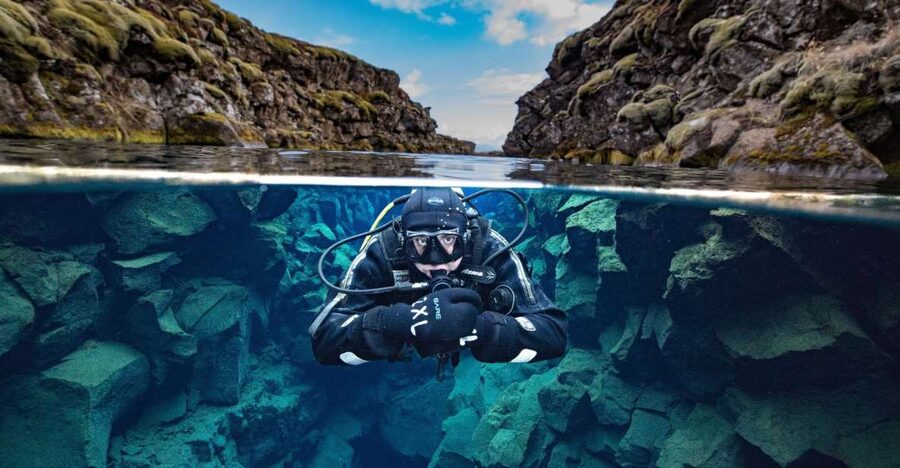
Reviewed · SILFRA SNORKELING TOURS
Silfra: Diving Between Tectonic Plates
Silfra is interesting because it is one of the few places where you can see the Earth split in two and feel it under your boots. You get 100 m+ visibility and the chance to go between two continents during your scuba swim in Thingvellir National Park. If you are lucky, you might get a guide like Filip, who earned praise for being friendly and calm, or Giancarlo, noted for strong instruction and a smooth pace.
Here are the two things I love most: the water clarity is so strong you can plan your route with your eyes, and the dry suit setup means you can enjoy the experience without turning it into a shivering contest. The one drawback to think about is the paperwork and certification bar is real, especially around dry suit experience requirements.
Key things you will notice fast
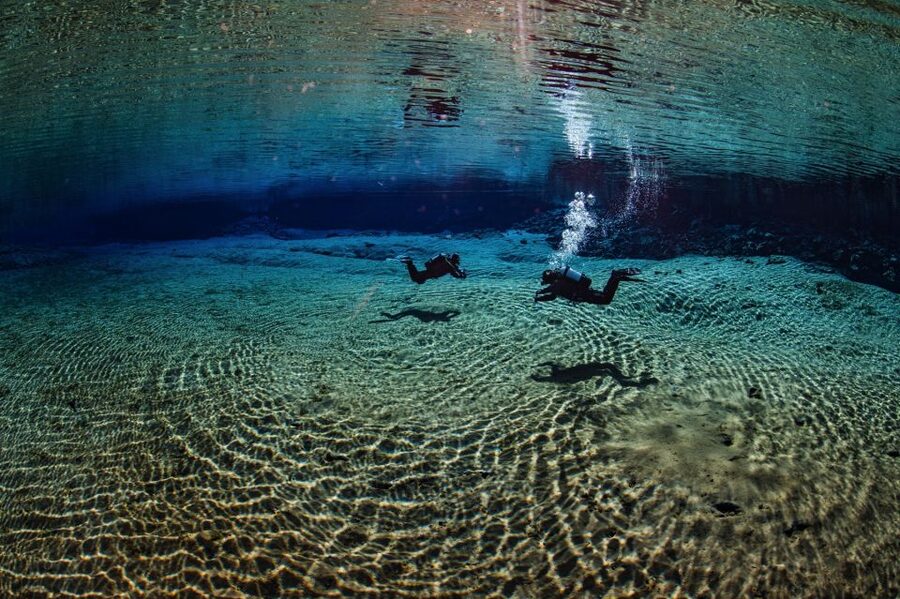
- 100 m+ visibility turns the cracks and ledges into something almost unreal
- Between two continents through Silfra, a rare geological claim that stays true underwater
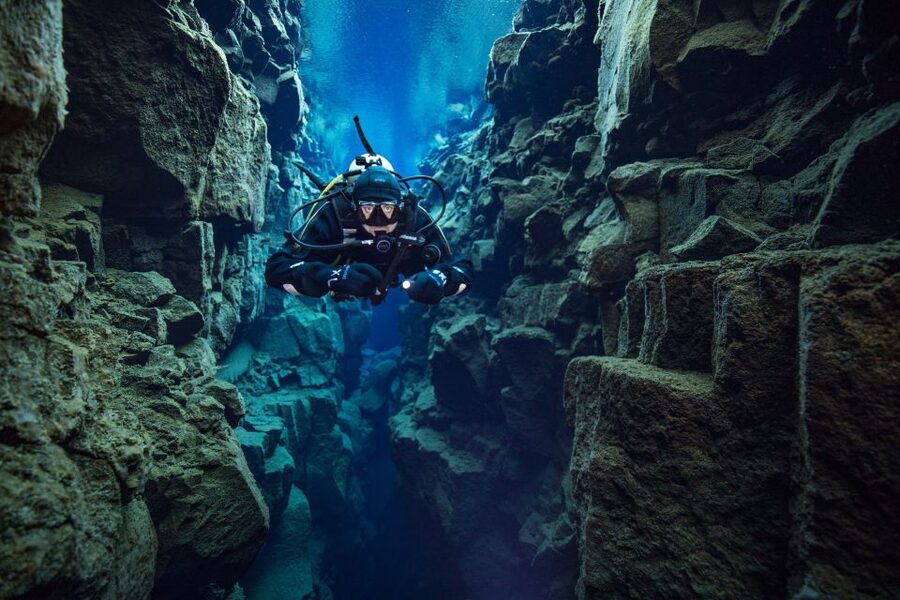
- 2°C year-round water is handled with a dry suit plus a warm undersuit
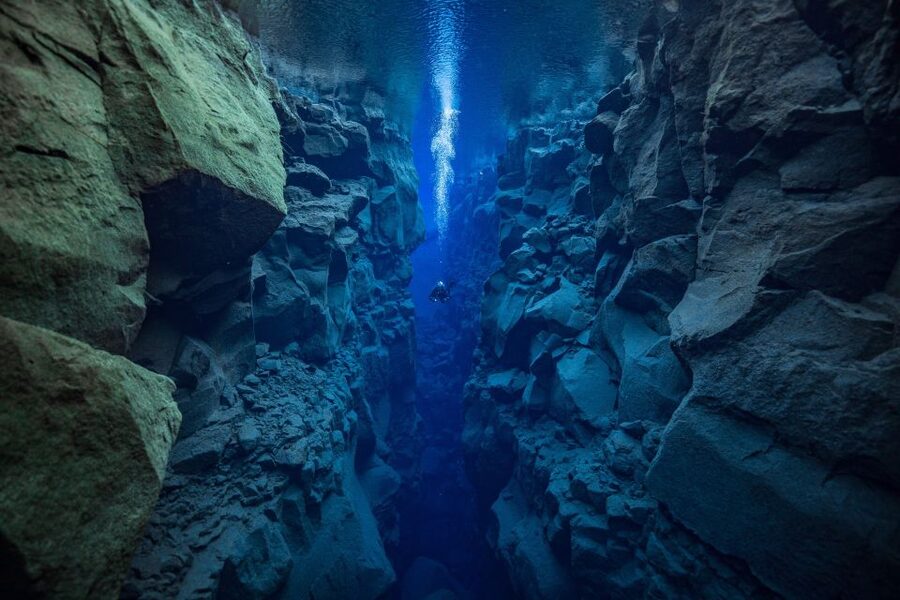
- Four sections with different shapes, including the narrow Big Crack and the deeper Silfra Cathedral
- Thingvellir UNESCO adds context above water, so you understand what you are seeing below
Why Silfra is a once-in-a-lifetime kind of geology
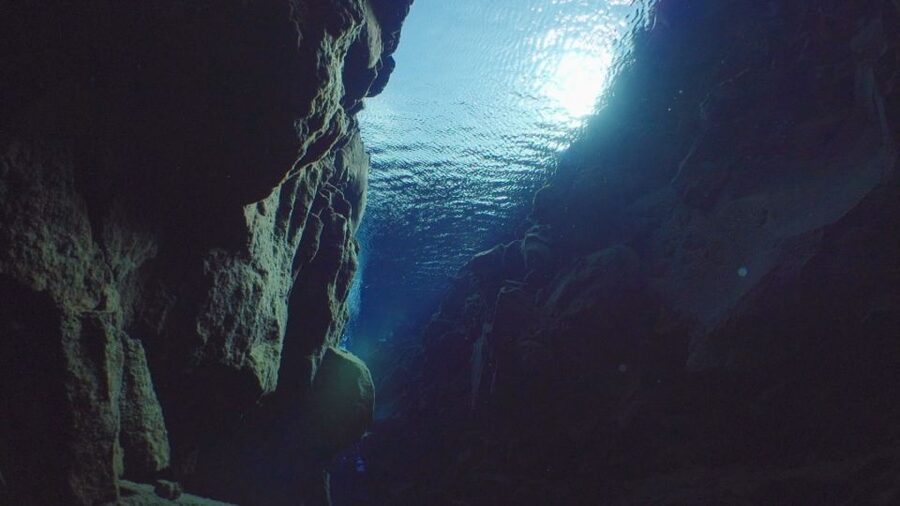
Silfra works as an experience because it mixes two layers of wonder. Above water, Thingvellir National Park already tells the tectonic story, with the rift and the dramatic valley. Under water, Silfra takes that same idea and gives you the rare viewpoint of standing inside the seam itself.
What makes it feel special is not only the headline, that you are going between the American and European plates. It is how clear the water is. With 100 m+ visibility, you stop guessing where the next crack starts, and you start noticing angles, edges, and depth changes. That clarity also makes the water color look unreal, with that mix of light and stone tones that you just do not get in most cold-water scuba spots.
Another reason this works is the structure of the route. You are not just thrown into one long corridor. You move through distinct parts, from narrow to wide, and then into a deeper section. That helps you stay oriented, and it keeps the experience from turning into one long blur.
More Silfra snorkeling tours:
- Silfra: Snorkeling Between Tectonic Plates – Meet on Location
★ 5.0 · 5,001 reviews - Reykjavík: Silfra Fissure Snorkeling between Two Continents
★ 4.7 · 1,712 reviews - Silfra Drysuit Snorkeling with Free Photos – Meet on Location
★ 5.0 · 1,299 reviews
The schedule, timing, and what it really feels like in 3 to 5 hours
This is a half-day plan in practice. You will be out for about 3 to 5 hours, but the day is paced so you do not feel rushed or cold for too long.
If you choose hotel pickup, expect a transfer from Reykjavik, then a ride toward Thingvellir. The travel time is roughly 45 minutes each way when pickup is included. If you do not want the bus, you can meet your guide at Silfra in Thingvellir National Park.
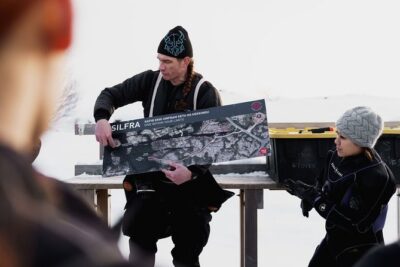
Either way, the day starts with a simple reality check: you need time for clothing and gear. Plan on about 1 hour for briefing, gearing up, and getting ready. That timing matters. Dry suit prep is not complicated, but it takes a bit of focus. Getting it right early helps your whole swim feel relaxed later.
Then you get your water time: about 45 minutes in the fissure, split across its sections. That is plenty when visibility is extreme, because you can slow down and actually look around. When you are done, you exit and walk back to the meeting point, about 250 meters.
You also get a warm finish. After the swim, hot chocolate and cookies help, and you will have time to chat with your guide. If they took photos during your session, you can also look at those after you are back on land.
Entering Thingvellir, and why the UNESCO setting matters
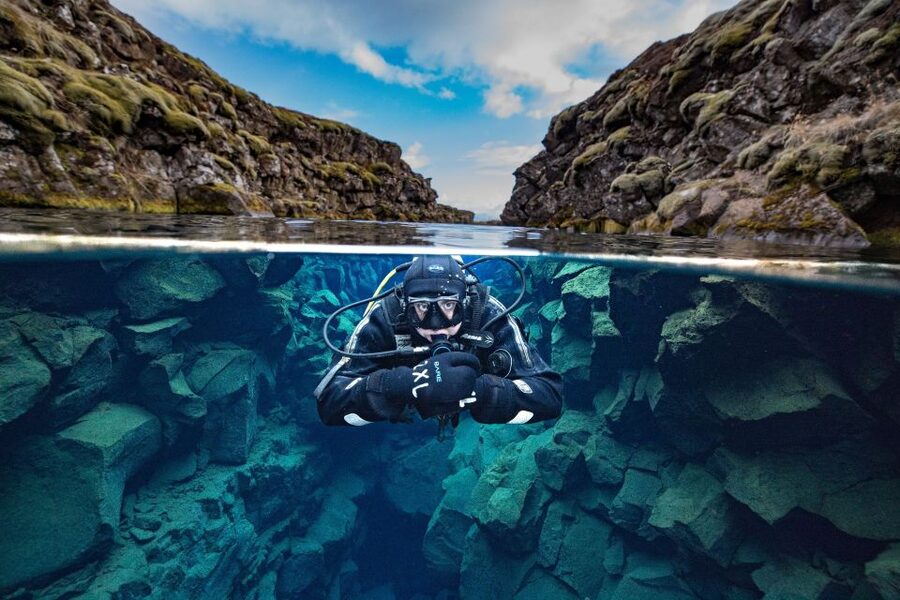
Silfra sits inside Thingvellir National Park, a UNESCO World Heritage Site. That is not just a label. It changes how you experience what is happening underwater.
Above ground, Thingvellir makes the tectonic zone easier to understand. You see the rift setting, the valley feel, and the sense that the plates are actively moving. Once you go into Silfra, those same plates become your “walls,” and the cracks you see underwater snap into a clearer story.
This matters for your brain more than you might expect. When you understand what you are seeing, the underwater scene becomes easier to follow. You stop treating it like abstract scenery and start noticing how the fissure widens, where the depth changes, and how the geometry of the fracture shapes what you can touch and where you can float.
It is also useful that Thingvellir is tied to Iceland’s Golden Circle area. In practical terms, it means you are not traveling hours and hours just for the scuba part. You can pair the experience with other Golden Circle stops if you want, without turning your day into a marathon.
Dry suit comfort, 2°C water, and the simple gear advantage
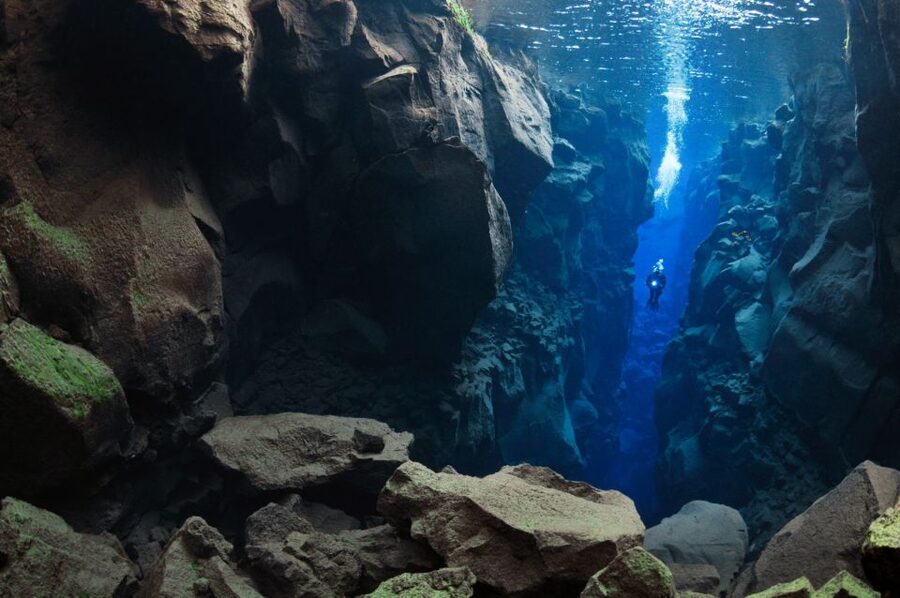
The biggest comfort win here is the dry suit. You will be in water that sits around 2°C year-round, no matter the weather. That is cold enough to turn an average cold-water setup into a quick exit for anyone not properly protected.
With the dry suit and a warm undersuit included, the focus shifts from survival to observation. You can actually enjoy your route and your breathing instead of constantly monitoring your body for signs of discomfort.
You also get heated help with logistics. There is a heated van to change clothes, which is a big deal in Iceland in general. Cold hands during gear changes are not fun. This set-up keeps the pre-swim portion calmer.
One more practical piece: you need to be prepared for the “cold-water rules” of this specific experience. You must have appropriate certifications and you must follow the guide’s instructions closely. That is not about being strict, it is about keeping things safe in a place where the water is clear, cold, and still physically challenging.
A few more Reykjavik trips worth comparing
- Silfra: Diving Between Tectonic Plates and Pick Up from Reykjavik
★ 5.0 · 590 reviews - Dive the Divide: Silfra Fissure Scuba Tour | Meet at Thingvellir
★ 4.5 · 172 reviews - Thingvellir: Silfra Fissure Diving with Optional Pickup
★ 4.6 · 73 reviews
The four Silfra sections, from Big Crack to Silfra Cathedral
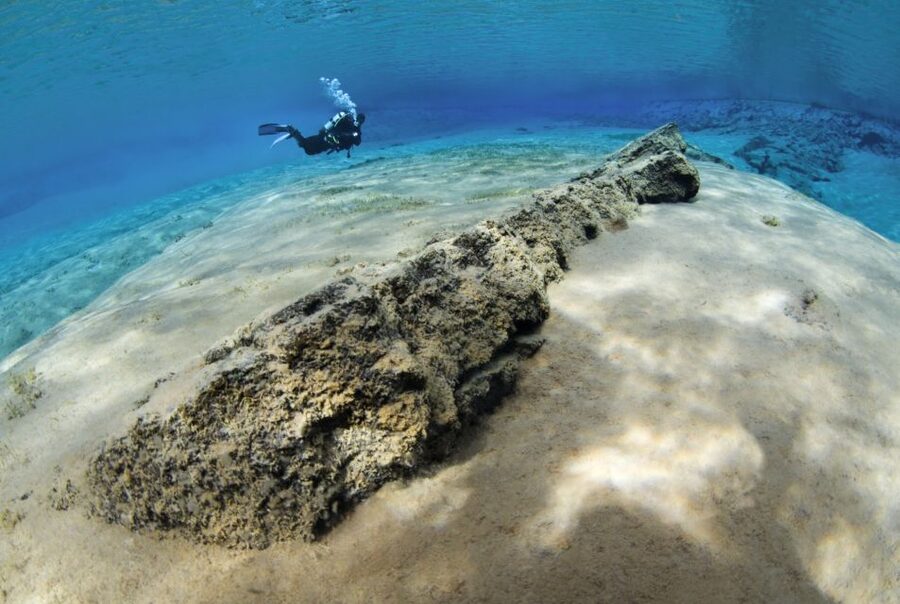
Your underwater time is designed around four named sections. Each one has a different feel, and that keeps the experience from becoming one long straight line.
Big Crack: the narrowest section you can touch
You start in a section called Big Crack, described as Silfra’s narrowest stretch. This is the moment that hits most people emotionally because the continental plates are so close you can touch them. It is one thing to hear that you are between two continents. It is another to feel the reality of that closeness in the shape of the fissure.
This section is also where you get your first wave of orientation. If your buoyancy feels slightly off, the narrow walls make it obvious. You will also likely spend time looking at the crack edges instead of chasing distance.
Silfra Hall: clarity and color take center stage
Next is Silfra Hall, where the fissure widens. The description here emphasizes a full spectrum of colors and that very high clarity. In practice, this is where 100 m visibility becomes more than a number. Light spreads in a way that makes the water and rock look layered.
One neat detail: if you look from the right angle at this stage, you can see lake Thingvallavatn, reportedly over 150 meters away. That is a great moment to practice calm head movement. When you move slowly, your eyes catch more, and your mind stops trying to rush.
Silfra Cathedral: the deeper part of the route
As you move toward the opening near Thingvellir Lake, you enter Silfra Cathedral. Depth there reaches about 23 meters. This section tends to be the biggest “depth sensation” in the experience, simply because your body notices the change, even if the time stays manageable.
This is also a good place to remind yourself that the route is controlled. You are not exploring a random underwater cave. You are on a guided, planned passage, and your guide’s control matters for safety and for keeping the group moving smoothly.
Silfra Lagoon: endless visibility to finish
Your swim ends in Silfra Lagoon. Think of this as the payoff. The water is still, the visibility stays strong, and you get that sensation that you are surrounded by open space rather than boxed in by walls.
Then it is back out through the platform and a short walk back, about 250 meters. You finish with warm drinks and cookies, which helps your body reset fast.
Photography, guide style, and why small groups matter
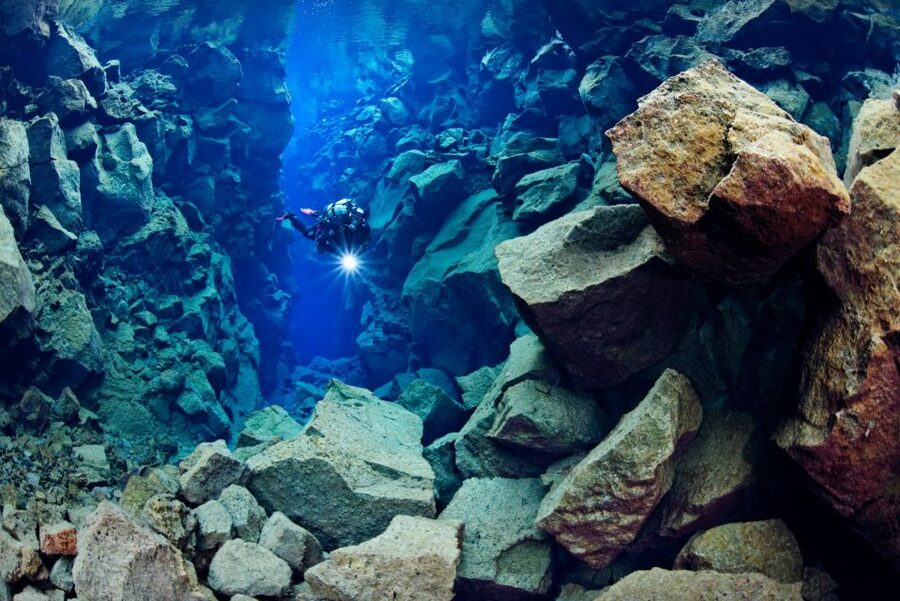
This experience is run as a small group, limited to 3 participants, with an English-speaking guide and PADI instructor involvement. That small number changes your experience in two ways.
First, your guide can pace you based on how you are handling cold water and buoyancy. Second, it makes it easier to stop, look, and follow attention cues without the usual crowd pressure.
If you get a guide like Filip, people have praised a friendly, organized feel and equipment that works perfectly. That is important. Cold-water gear that leaks or does not seal well can ruin the mood. You want to trust your setup, so you can focus on what you came for.
There is also time built in after the swim. You can chat with your guide, ask questions, and check photos taken during the experience. I like this format because the best part of Silfra is often hard to describe out loud once you are back on land, and photos help you remember specific angles and sections.
Price and value: what you pay for, and what makes it worth it
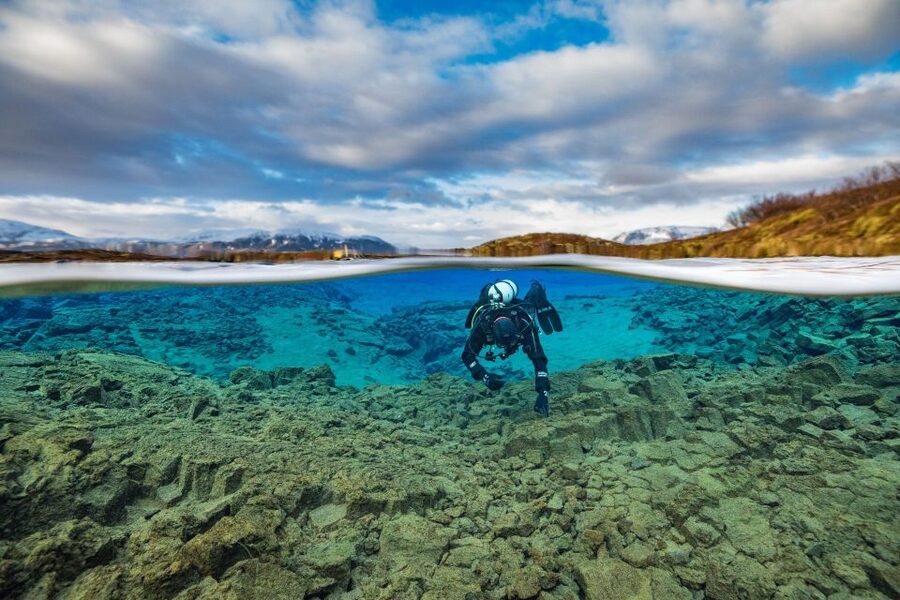
At $289 per person, Silfra is not a cheap add-on. The value is not in luxury. It is in the combination of factors that are hard to replicate elsewhere.
You are paying for:
- Equipment and dry suit included, which is a major cost driver in cold-water scuba setups
- The entry fee for Silfra
- A live guide/PADI instructor presence throughout
- A very specific location in Thingvellir National Park, with the logistical setup needed to run this in a safe, controlled way
- Heated van change setup, plus warm drinks after
The real “value math” for me is this: most cold-water experiences get expensive because you have to rent the right gear, arrange transportation, and still hope conditions are workable. Here, the gear and the cold-water solution are part of the deal, and the water clarity is the headline. When the clarity is truly 100 m+, you spend your time looking, not fighting conditions.
If you are already planning a Golden Circle day, it also helps that this fits into a half-day block rather than forcing a complicated multi-day route.
Who should book, and who should skip
This is the part to take seriously, because the experience has specific requirements and limits.
You should consider booking if
- You have PADI Open Water certification (or comparable certification from another organization)
- You have dry suit experience and can provide written proof from an instructor
- You are comfortable following procedures in cold water
- You want a highly guided, structured route through a rare geological setting
You should think twice if any of these apply
- You are pregnant
- You do not meet the listed physical limits (weight, height, and minimum body weight)
- You cannot meet the dry suit experience proof requirement within the two-year window
- You are under the minimum age of 17
You also must read and sign a medical statement and a liability release form before starting. You cannot bring alcohol or drugs.
Finally, you will need to bring warm clothing, and you need to be ready at the meeting point or pickup location on time.
Should you book Silfra between the plates?
I would book this if your idea of a dream Iceland day includes rare geology, extreme water clarity, and a cold-water challenge that is handled with the right gear. If you like structured experiences with a guide and you want clear “this is where we are” moments, Silfra is one of the best places on the planet for that.
I would not book if you are hoping for a casual, no-forms, no-training option. The certification and medical requirements are part of the deal, and you need dry suit experience proof.
If you meet the requirements and you have your mindset set for cold, clarity, and careful pacing, then this is the sort of experience you will keep talking about long after the photos fade.
FAQ
Where is the meeting point for this experience?
The meeting point is Silfra in Thingvellir National Park. Arrive 15 minutes before the activity starts.
How long does the experience take?
The total duration is 3 to 5 hours. You also spend about 45 minutes in the water, plus time for briefing and gearing up.
What water temperature should I expect?
The water is about 2°C year-round, and you will use a dry suit plus a warm undersuit.
Do I need prior scuba certification?
Yes. You must have PADI Open Water certification or comparable certification from another dive organization.
What dry suit experience do I need to participate?
You must have dry suit certification and either a logged dry suit outing within the past two years, or at least 10 logged dry suit outings within the past two years, with written proof from an instructor.
Is hotel pickup available from Reykjavik?
Hotel pickup and drop-off are optional. If you select the pickup option, you will use a shuttle from your designated location and return afterward.
What group size should I expect?
This is a small group, limited to 3 participants, with live guidance from an English-speaking guide.
Recently reviewed around Reykjavik
- Private Day Trip to the Icelandic South Coast from Reykjavik★ 5.0 · 45 reviews
- Deluxe Whale Watching and Whales of Iceland Exhibition Combo from Reykjavik★ 4.5 · 13 reviews
- Day Trip to the Golden Circle and Hot spring Geyser by 4WD Jeep from Reykjavik★ 5.0 · 27 reviews
- Private Transfer from Reykjavik to Reykjavik Airport KEF by Sedan★ 5.0 · 3 reviews
- Private Tour Höfn: Jokulsárlón , Diamond Beach, Secret Glacier★ 4.5 · 3 reviews
- South Coast and Glacier Snowmobiling Day Trip from Reykjavik★ 4.5 · 22 reviews
- Cold & Hot: Adventure Spa Tour Combo: Silfra & Sky Lagoon Self-Drive★ 5.0 · 36 reviews
- Experience Countryside of Iceland by Horseback Riding★ 4.5 · 16 reviews
Silfra Snorkeling Tours, compared.
Snorkeling Between Tectonic Plates – Meet on Location
Read our review →
Fissure Snorkeling Tour with Underwater Photos
Read our review →
Silfra Fissure Snorkeling between Two Continents
Read our review →
Silfra Drysuit Snorkeling with Free Photos – Meet on Location
Read our review →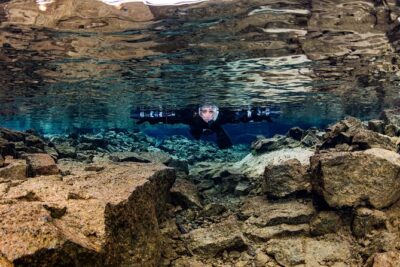
Snorkeling Between Tectonic Plates Pick Up from Reykjavik
Read our review →
Half-Day Snorkeling Day Trip with Underwater Photos
Read our review →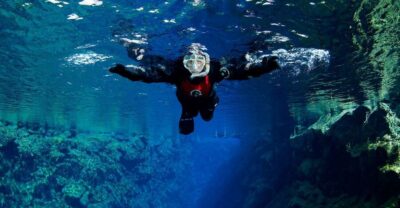
Silfra Drysuit Snorkeling Tour with Free Photos – From Reykjavik
Read our review →Browse the lists this tour appears in