
Reviewed · LAVA TUNNEL TOURS
Geological Lava Tunnel Adventure – Arnarker Cave
This kind of Iceland outing is interesting because you are not just sightseeing inside a tunnel, you are doing geological caving in a more unknown lava tunnel that feels rugged and natural. I like that a professional geological guide breaks down how lava caves form in plain, teachable moments. I also like that the cave is not built for walking, so you get the real deal: boulders, uneven footing, and lots of shapes left by volcanic flow. The main drawback is that you need solid balance and fitness, because there is no man-made path and you will climb over rock in most parts.
You start with pickup in Reykjavik at Bus Stop 8 (the parking lot of Hallgrimskirkja) and then head out through Iceland’s countryside before entering the cave. I like that the walk is short but memorable, the tunnel is about 500 m long, and you stay in a group limited to 6 people. The weather can be nasty outside, but it is a cave tour, so conditions generally do not change your plan much. The cold inside is real though, often around 4°C, so you will want to dress for it.
Key points to know before you go
- A lesser-known lava tube that feels more natural than the more famous version
- Small group of up to 6, which usually means more personal attention
- Professional geologist or volcanologist teaching on-site, plus photo stops
- Real caving terrain, no man-made path and lots of scrambling over boulders
- All core gear provided, including helmet, headlamp, and gloves
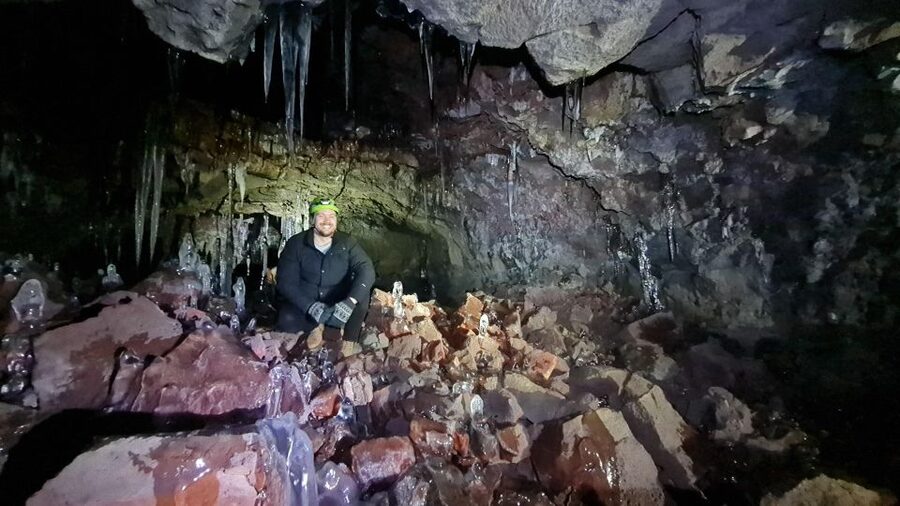
- Winter can mean ice formations, even though the cave stays cold year-round
Why Arnarker Cave feels more real than the usual lava tunnel
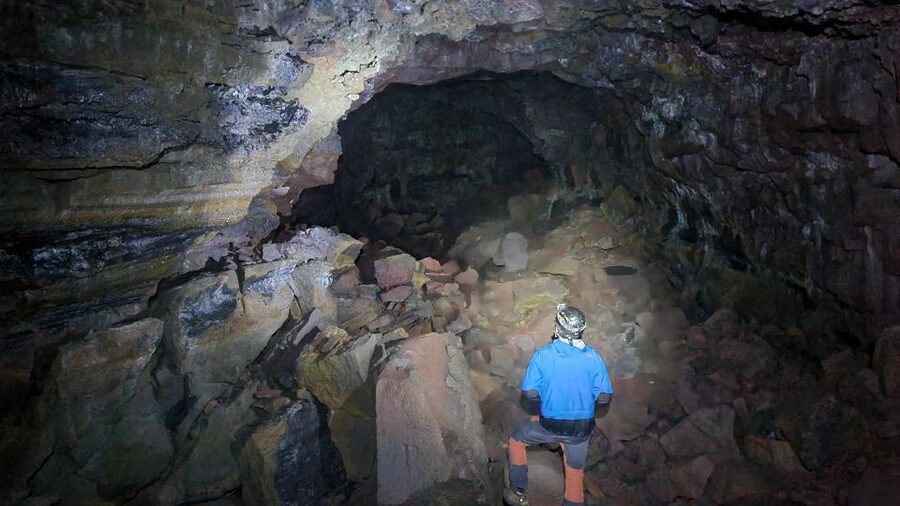
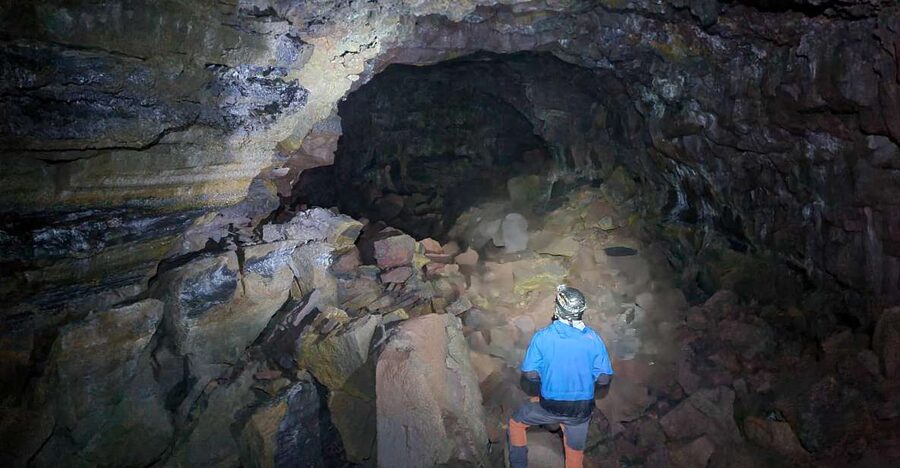
Arnarker Cave is built for people who want the atmosphere of caving, not the comfort of a paved attraction. The route is about 500 m long, but the bigger deal is what that distance happens on: a natural lava tunnel with uneven ground and rock obstacles. If you are hoping for a smooth, easy walk, this is not that kind of tour.
What makes it feel authentic is that you are not following a prepared walkway. There is no man-made path inside, and you will be climbing over boulders in most parts. That changes how you experience the cave. You slow down, you watch your feet, you pay attention to the rock texture and the shapes where lava did its work. It turns the trip into something more physical and more observational.
The other reason it stands out is the teaching style. This is a geological adventure, led by a professional guide who explains Icelandic volcanism and how lava tunnels form. You do not just hear a lecture from the outside. You learn while you are in front of the features, so the “why” clicks faster.
More lava tunnel tours near Reykjavik:
- The Lava Tunnel Tour – Raufarhólshellir
★ 5.0 · 2,373 reviews - Reykjavik: Snæfellsnes Day Trip with Vatnshellir Lava Cave
★ 4.7 · 1,108 reviews - From Reykjavik: Raufarhólshellir Lava Tunnel by Bus
★ 4.6 · 793 reviews
Reykjavik pickup and the drive that sets the mood
Your trip starts with pickup at Bus Stop 8 in Reykjavik, in the parking lot of Hallgrimskirkja. From there, you travel to the cave area, using a scenic route when conditions allow. The transfer is part of the experience, because it helps you build context for what you are about to see. Iceland does not hide its volcanic story, and the approach gives you a sense of how dynamic the ground can be.
The ride is also a practical buffer. You do not have to figure out transportation on your own, and you can focus on arriving ready. Since this is a half-day tour with a fixed duration of 5 hours, the pickup time matters. Arrive a little early so you are not rushing in the cold.
Inside the cave: what the 5 hours actually feels like
Once you arrive, the core “caving mode” begins quickly. You get fitted with the equipment that keeps you safe and able to move: a helmet, headlamp, and gloves. Having your light set up before you enter is a big quality-of-life detail, because you want both hands free for balance and climbing.
Then it is into the tunnel.
The first stretch: getting your balance early
Expect the beginning to be the most about getting oriented. One long review described the first part as roughly 100 m and taking about an hour. That sounds slow until you realize how much time is spent adjusting your footing, stepping around rock, and keeping a steady pace. It is not a slow trip because the guide is dragging their feet. It is slow because the cave demands attention.
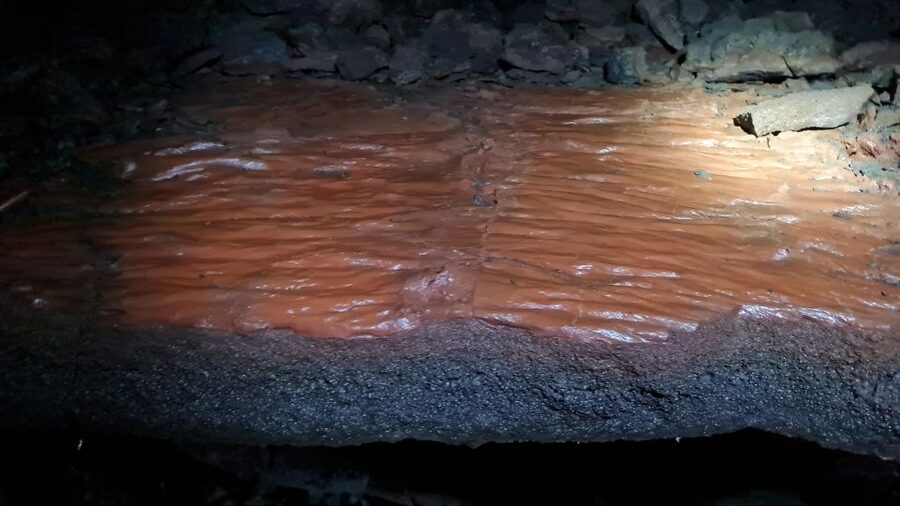
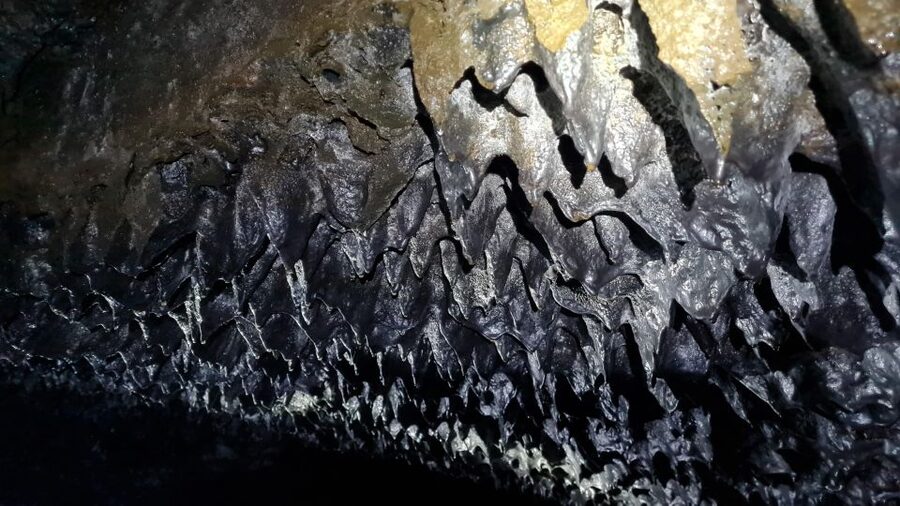
This early segment is also where you learn to read the environment. You notice changes in ceiling shape, the way the tunnel narrows in places, and the difference between rough rock and smoother surfaces where lava moved. It is the start of the “how lava behaves” lesson, not just a warmup.
Same corner of Iceland, a different kind of day out:
- Reykjavik: Golden Circle Full-Day Tour with Kerid Crater
★ 4.8 · 24,485 reviews - Reykjavik Food Walk – Local Foodie Adventure in Iceland
★ 5.0 · 18,952 reviews - Iceland: Northern Lights Bus Tour from Reykjavik
★ 4.1 · 11,161 reviews - Reykjavík: South Coast Waterfalls, Black Sand & Glacier Tour
★ 4.8 · 11,030 reviews
The longer middle: 400 m of real tunnel time
After that first segment, the tour continues deeper through another stretch of roughly 400 m, described as about 1.5 hours. That longer chunk is where you get the most of the lava tube feeling. You pass more of the geological features the guide points out, and you spend more time in the rhythm of moving carefully through a natural tunnel.
In winter, you can also see ice formations along geological features. That detail matters because it changes the look of the cave without changing the basics of the route. The cave stays cold either way, but winter adds a visual layer that can be striking, especially when you are bouncing your headlamp light off pale ice shapes.
Photo stops and hands-on moments
Even when the terrain is active, the guide builds in moments to pause. The experience is not only about moving. It is also about learning what you are looking at. Photo stops happen along the way, and you will be close enough to see details that are usually missed on more casual tunnel visits.
There is also a “touch the rock” vibe. One review described it as unforgettable to touch the rock yourself. I take that as a hint that this is not a purely hands-off experience. You are moving close, observing closely, and using your senses to understand the structure.
The cold factor: 4°C is not a suggestion
The tunnel temperature rarely exceeds 4°C, even in summer. That means clothing matters a lot. Water can drop from the ceiling, so waterproof layers help. Even with gear provided, you still control comfort with what you wear before you arrive.
What your geologist teaches you in the tunnel
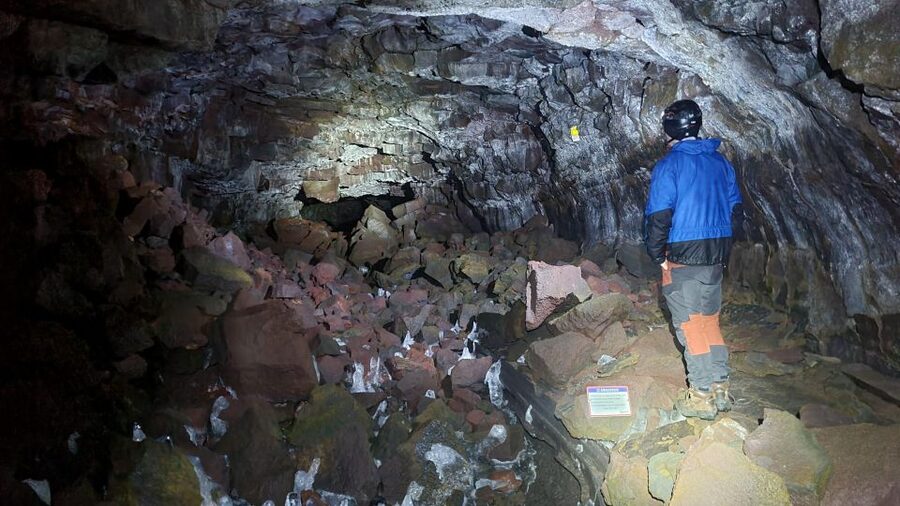
The guide is a professional geologist, sometimes described as a volcanologist in firsthand accounts. Either way, the focus stays practical: how Iceland’s volcanism forms lava tubes and how those tubes evolve.
The key value for you is that the lesson is anchored to physical features. Instead of memorizing lava words, you connect the explanations to what you see around you: the shapes left behind by flowing lava, the way a tunnel holds on to structure as it cools, and how the cave becomes a record of volcanic behavior.
This matters if you care about the “why,” not only the “wow.” You leave with a mental map of how lava caves form, what makes this type of tunnel different from other volcanic structures, and why Iceland has so many of them. If you are the type who likes science on trips, you will probably appreciate that the guide can explain the story in a way that fits the pace of the cave.
Gear and clothing: how to pack like you mean it
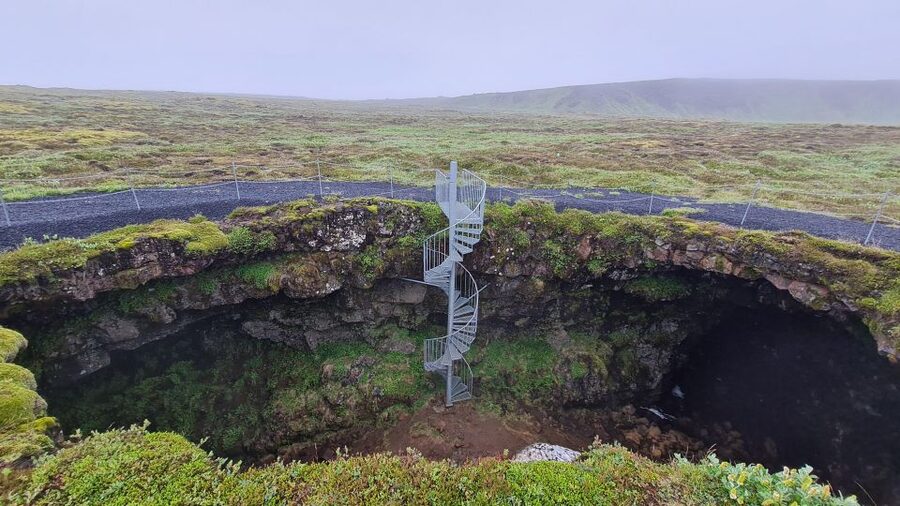
Good gear from the operator helps, but your clothing is still the make-or-break part of caving comfort.
What is provided
You get essential equipment, including helmets, headlamps, and gloves. That is a big cost saver and a big safety plus. It also reduces the “did I bring the right thing?” stress.
What you should bring
Hiking shoes are required. The guidance is even more specific: hiking boots with ankle support are necessary, and you should also bring a waterproof jacket since water can drop from the ceiling. Even if you think you pack light, do not treat this part as optional.
A waterproof layer is especially useful because the tunnel is not dry like a museum hall. Moisture and dripping happen, and your jacket can be the difference between comfortable and miserable.
Physical prep
You need good physical shape and balance. There is no man-made path inside, so climbing over boulders is routine in most areas. If you have low level of fitness, recent surgeries, or anything that makes scrambling risky, this tour may not be a smart match.
Who this Arnarker Cave trip suits, and who should skip it
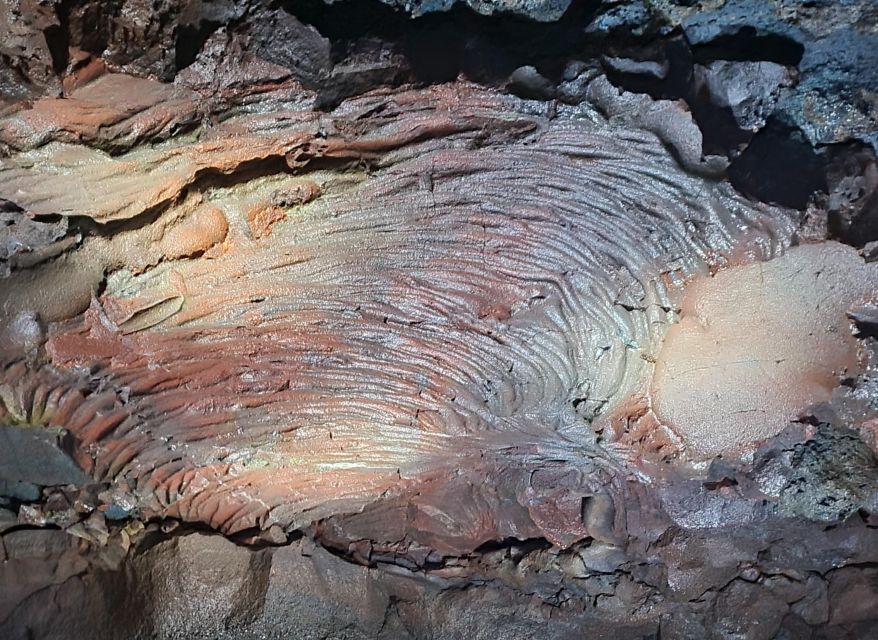
This tour is built for the outdoors-minded and the geology-minded. If you like active travel, careful movement, and you want your science taught in context, you are likely to enjoy it.
It is also explicitly not suitable for a wide set of needs:
- Children under 15
- People over 65
- Pregnant women
- People with back problems
- People with mobility impairments
- People with claustrophobia
- People with heart problems
- Wheelchair users
- People over 200 cm (6 ft 6 in)
- People over 125 kg (275 lbs)
- People with recent surgeries
- People with low level of fitness
If you fit one of those categories, it is better to look for a different experience that is designed for comfort and accessibility. Cave trips can be unforgiving because footing is uneven and movement is required.
If you are within the age range (15 to 65), have good balance, and can handle climbing over boulders without panicking, this is exactly the kind of Iceland activity that gives you a “real place” feel.
Price and value: is $214 worth a 5-hour lava-tube caving trip?
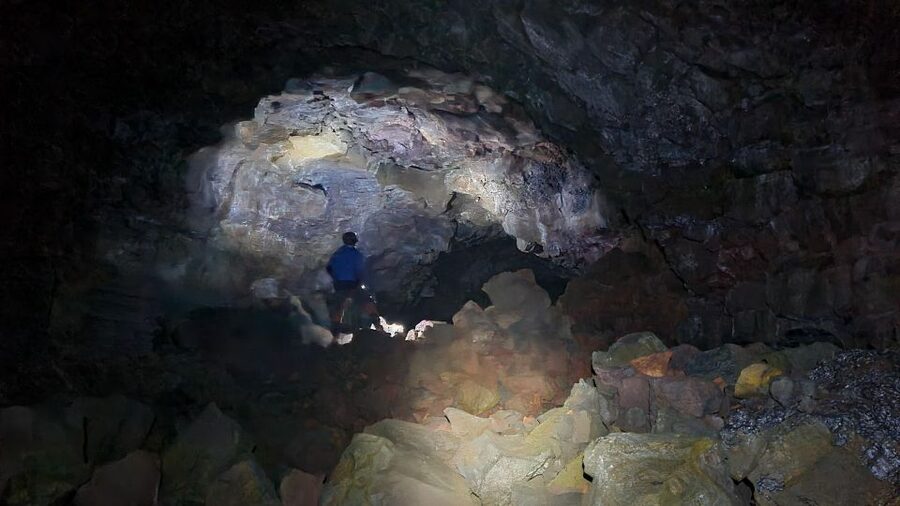
At $214 per person for a 5-hour small-group caving adventure, this is not the cheapest thing you will do in Iceland. But it also includes several value drivers that matter.
You are paying for:
- Pickup and drop-off in Reykjavik (Bus Stop 8)
- A professional geological guide
- Core safety equipment: helmet, headlamp, gloves
Most DIY cave visits do not include trained instruction and proper gear. Here, the operator takes on the logistics and hands you the essentials, so your cost turns into an experience that is safer and more educational.
The small group size is another value piece. Limited to 6 participants, you are less likely to feel rushed through the cave. And a small group helps the guide manage the route more carefully, which is crucial when there is no man-made path.
If you are comparing this to a more famous, more managed lava tunnel visit, the price is justified by the fact that Arnarker feels more adventurous and more natural. You get the “work a little for it” experience, plus geology teaching while you are there.
My decision guide: should you book Arnarker Cave?
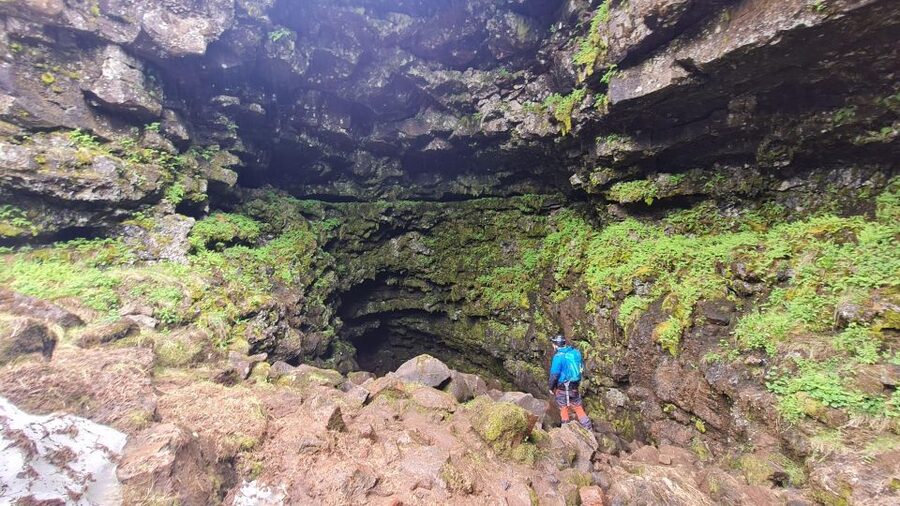
Book Arnarker Cave if you want a hands-on caving experience with real lava-tube terrain, you can handle uneven footing, and you want geology explained by a professional guide in a way that makes sense inside the cave. You will likely enjoy the trip most if you like active travel and you dress properly for cold and moisture.
Skip it if you need a smooth walking route, if boulders and climbing make you uneasy, or if you are in any of the tour’s not-suitable categories, including claustrophobia, back problems, mobility limitations, or significant heart-related concerns. Also skip it if you show up without ankle-support boots and a waterproof jacket, because the cave environment is not forgiving.
FAQ
Where is the meeting point?
The meeting point is Bus Stop 8, in the parking lot of Hallgrimskirkja.
How long is the Arnarker Cave tour?
The duration is 5 hours.
How big is the group?
This is a small group tour limited to up to 6 participants.
Is pickup and drop-off included?
Yes. Pickup and drop-off in Reykjavik are included at Bus Stop 8.
What equipment do I get?
You get necessary equipment including helmets, headlamps, and gloves.
Do I need to bring hiking boots?
Hiking shoes are required. Hiking boots with ankle support are necessary, and hiking boots are not included.
What should I wear for the cave?
Dress warm. The cave temperature rarely exceeds 4°C even in summer, and you should also bring a waterproof jacket since water can drop from the ceiling.
Is food and drinks included?
No. Food and drinks are not included.
Do weather conditions affect the tour?
Bad weather conditions do not impact the tour, and it can take place all year around.
Is the tour suitable for children and older adults?
The age limit is 15 to 65. It is not suitable for children under 15 and not suitable for people over 65.
If you tell me your travel month and your comfort level with scrambling over rocks, I can help you sanity-check whether this one fits your day in Iceland.
Recently reviewed around Reykjavik
- Private Day Trip to the Icelandic South Coast from Reykjavik★ 5.0 · 45 reviews
- Deluxe Whale Watching and Whales of Iceland Exhibition Combo from Reykjavik★ 4.5 · 13 reviews
- Day Trip to the Golden Circle and Hot spring Geyser by 4WD Jeep from Reykjavik★ 5.0 · 27 reviews
- Private Transfer from Reykjavik to Reykjavik Airport KEF by Sedan★ 5.0 · 3 reviews
- Private Tour Höfn: Jokulsárlón , Diamond Beach, Secret Glacier★ 4.5 · 3 reviews
- South Coast and Glacier Snowmobiling Day Trip from Reykjavik★ 4.5 · 22 reviews
- Cold & Hot: Adventure Spa Tour Combo: Silfra & Sky Lagoon Self-Drive★ 5.0 · 36 reviews
- Experience Countryside of Iceland by Horseback Riding★ 4.5 · 16 reviews
Lava Tunnel Tours, compared.
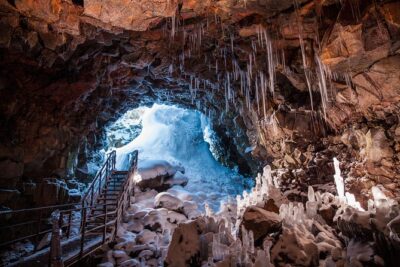
Raufarhólshellir Lava Tunnel: Underground Expedition
Read our review →
Snæfellsnes Day Trip with Vatnshellir Lava Cave
Read our review →
The Lava Tunnel Tour with Transfer from Reykjavik
Read our review →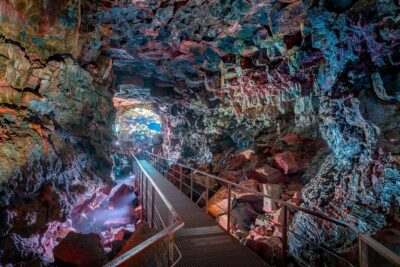
Lava Tunnel Tour Including Transfers from Reykjavik
Read our review →
Epic Snæfellsnes Adventure with Lava Cave Small-Group Day-Tour
Read our review →Browse the lists this tour appears in