
Reviewed · 7-DAY EXPERIENCES
7 Day Around Iceland Tour- PRIVATE TOUR
A weeklong private circle around Iceland is interesting because it stitches together the island’s biggest themes, geology, power waterfalls, geothermal weirdness, and glacier ice, without you spending your vacation doing navigation math. I love the way the Golden Circle stops are built in early, so you start with the big historical and geothermal hits. I also love that the private guide is right there, ready to connect what you see with the why behind it.
My only real caution is the price. At $11,101.77 per person, this is a premium private experience, so it only makes sense if you value having everything handled for you and you want a relaxed pace with someone steering the day.
Key points to know before you go
- Private guiding, only your group: You’re not sharing time, pacing, and stops with strangers, so the schedule feels more personal.
- Strokkur timing at Geysir: You go to the geothermal core, where Strokkur erupts on average every 4 minutes.
- Geothermal breaks that feel Icelandian: A tomato-field lunch at Friðheimar and a soak at Secret Lagoon are standout “slow down” moments.
- The ice-and-black-sand duo: Jökulsárlón and Fjallsárlón give you icebergs first, then black-sand walking at what’s often called Diamond Beach.
- Dettifoss power stop: You get the largest waterfall in Iceland, with the scale of Europe’s “most powerful” claim in mind.
- Seasonal ice options: Winter can include natural ice cave exploration, while summer includes a glacier tunnel day trip at Langjökull.
The appeal of a private Iceland loop that covers serious ground
This is a classic one-week strategy: don’t just see one region, see how the island changes. In seven days, you move from the Þingvellir parliament site, to the south coast’s waterfall circuit, to Vatnajökull ice country, up through Mývatn and the north, then out to the Snæfellsnes peninsula and western Iceland. That’s a lot of driving, but the value is that you’re not renting a car, planning routes, and doing turn-by-turn stress.
A private guide matters here because Iceland is not just “pretty stops.” The route is full of natural processes, lava, melting glaciers, geothermal fields, and human stories tied to place names. When someone explains, you notice more. And the better guides on this program, including Helga Bára, Addy, and Sigrún in guest accounts, tend to focus on practical context: how water and ice shape the land, and why Iceland’s myths and geology go together so well.
A few more Reykjavik trips worth comparing
- Private South Coast Fire and Ice: Glacier viewpoint & Lava Show
★ 5.0 · 451 reviews - Private Golden Circle, Sky Lagoon and Friðheimar Greenhouse Lunch
★ 5.0 · 381 reviews - Blue Lagoon Entry Ticket with Optional Private or Shared Transfer
★ 4.5 · 343 reviews
Starting in Reykjavik and building a day-one sense of Iceland
The tour meets with a start time of 9:00 am, with pickup offered and a mobile ticket. That matters because it sets you up to leave on time rather than losing your morning to logistics.
The first big target is Thingvellir (Þingvellir). This isn’t just a scenic stop. In 930, the Icelandic Parliament established one of the first democratic assemblies in the world, and Þingvellir became a World Heritage Site in 2004. You also walk to Öxarárfoss waterfall, which is a good “warm-up” hike: short, outdoors, and perfect for shaking out your legs after travel.
From a practical angle, this start is smart. You’re learning Iceland’s “people story” and its “land story” at the same time, then you move straight into geothermal power.
Golden Circle essentials: Þingvellir, Geysir, and Gullfoss at walking speed
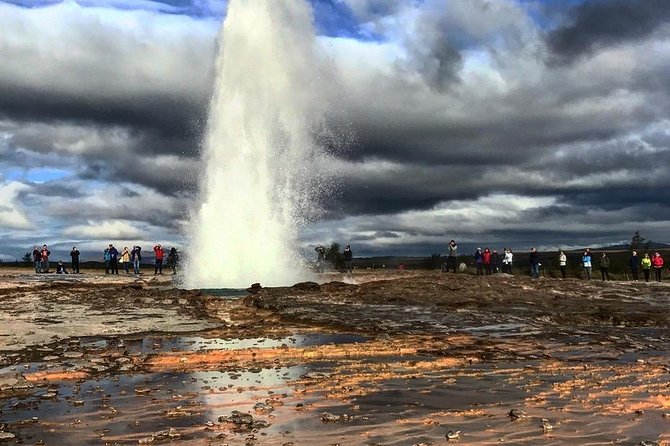
After Þingvellir, the route heads to Geysir. Here’s the key point: the geyser called Geysir is almost inactive, but Strokkur erupts on average every 4 minutes, and it’s only a few meters away. That timing makes it more than a photo stop. You can watch, wait, and usually catch multiple eruptions without feeling like you’re gambling.
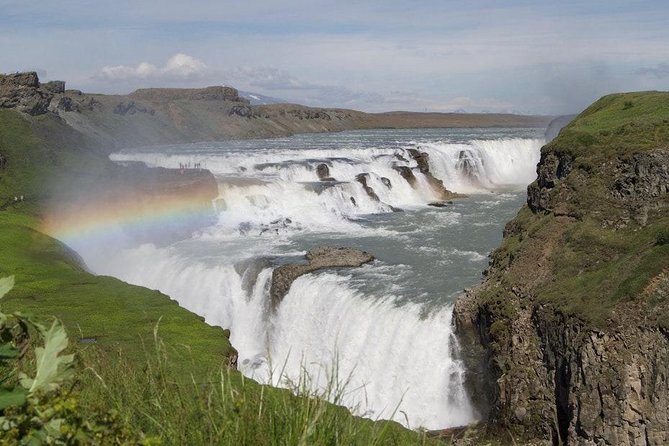
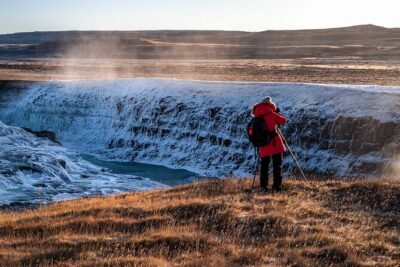
Next is Gullfoss. You get two viewing styles: a view from above, plus a path that walks you down closer to the powerful falls. This is one of those Iceland moments where you feel the spray and understand why people describe it like force, not scenery.
A small consideration: waterfalls and active geothermal areas often mean wind, spray, and wet ground. You’ll get the most out of these stops by dressing for outside time, not for a quick photo.
Friðheimar tomato lunch and Secret Lagoon, the geothermal reset you’ll remember
At Friðheimar, the star is tomatoes grown using geothermal heat and geothermally generated electricity. The unusual part is that the restaurant sits in the tomato field with a tropical climate inside. You’re eating Iceland-grown tomatoes while being surrounded by the greenhouse structure that makes it possible. It’s a great example of how geothermal energy shapes daily life, not just tourist attractions.
Then it’s time to soak at Secret Lagoon (Gamla Laugin). This is a natural geothermal bath where you can relax in a raw-feeling setting at the end of the day, with an overnight near Hvolsvöllur. I like this kind of stop because it breaks up the adrenaline. You go from roaring waterfalls and steaming ground to a slower body-and-mind reset.
If you’re the type who hates “tight schedules,” this day hits a good balance: culture and science in the morning, comfort in the evening.
Same corner of Iceland, a different kind of day out:
- Reykjavik: Golden Circle Full-Day Tour with Kerid Crater
★ 4.8 · 24,485 reviews - Reykjavik Food Walk – Local Foodie Adventure in Iceland
★ 5.0 · 18,952 reviews - Iceland: Northern Lights Bus Tour from Reykjavik
★ 4.1 · 11,161 reviews - Reykjavík: South Coast Waterfalls, Black Sand & Glacier Tour
★ 4.8 · 11,030 reviews
South coast power: Seljalandsfoss behind the falls and Skógafoss in full view
The next cluster leans hard into waterfalls and the south coast’s black-sand geology.
Seljalandsfoss is 60 m high, and it’s one of the few waterfalls where you can walk behind it. That changes the experience. You’re not just looking at water, you’re moving through the feel of it.
Then comes Skógafoss, the most famous waterfall in Iceland. You’ll also learn something useful here: Seljalandsfoss and Skógafoss are in glacier rivers, meltwater from Eyjafjallajökull and Mýrdalsjökull. That connects the south coast’s flow to the glaciers that feed it.
After that, the route moves toward glacier ice and volcanic context with Sólheimajökull. This outlet glacier flows out of Mýrdalsjökull, and underneath that ice cap is the volcano Katla. Even if you’re not hiking far, understanding that “ice sits above volcano” changes how you interpret the scene.
Dyrhólaey and Reynisfjara: black beach geology, basalts, and seastacks
You’ll reach Dyrhólaey, a 120 m high promontory where the sea has eroded the headland. The payoff is the combination of south coast views and the access to black beach terrain.
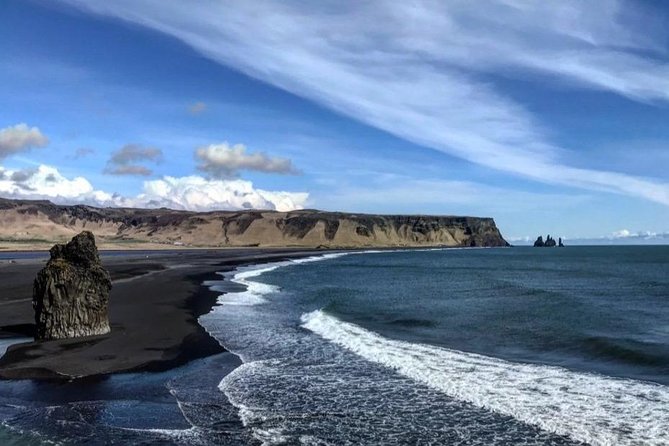
Next is Reynisfjara (Reynisdrangur area), the black beach. Iceland is volcanic, so the coastline is mainly basalt. On Reynisfjara, you’ll notice striking basalt columns, plus Reynisdrangar, a sea stack made by wave erosion.
A word of caution that’s practical, not scary: this area can be rough. You’ll want to stay where you’re meant to stand and respect any barriers, especially if you’re near wave-action viewpoints.
Skaftafell, Fjaðrárgljúfur, and the glacier lagoon day you talk about later
Once you’re in Vatnajökull country, the tour leans into scale. Skaftafell (now part of Vatnajökull National Park) is tied to the largest glacier in Europe and the surrounding wilderness.
Then comes Fjaðrárgljúfur, a canyon carved and formed by glacial river action about 9,000 years ago. It’s about 100 m deep and 2 km long, and it became world famous after appearing in a Justin Bieber music video. That pop-culture fact is fun, but what you’ll really remember is the depth and the tight canyon feel when you’re walking and looking down into it.
After that you hit the main ice-and-iceberg pair:
- Jökulsárlón: a lagoon in front of a calving glacier, with floating icebergs.
- Fjallsárlón: another glacier lagoon, also fed by outlet glacier ice that breaks off and floats.
Both include the chance to walk on the black beach area often referred to as Diamond Beach between icebergs. This is where the tour shifts from “seeing a place” to “experiencing the ice.”
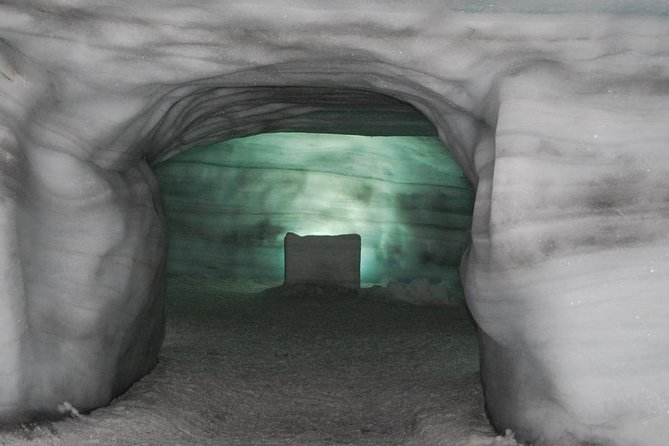
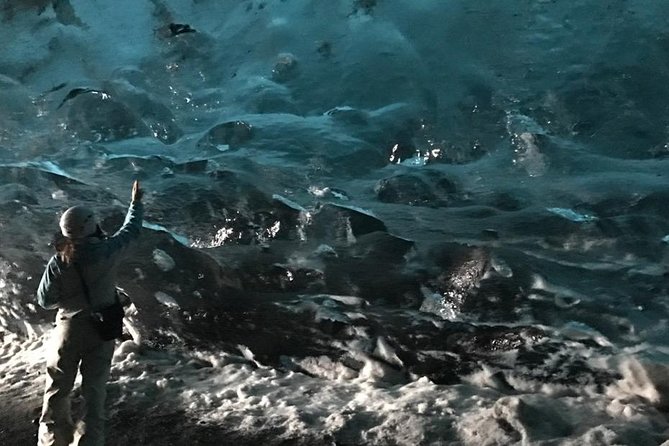
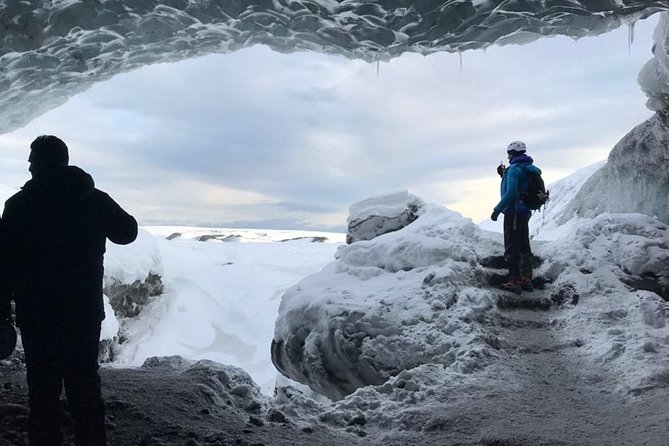
If you travel in winter (November to March), the plan also includes ice cave exploration into natural ice caves. In summer (April to October), there’s a different option farther west in the Iceland plan for an ice tunnel on Langjökull. Which one you actually do depends on the season.
Höfn to the east: fishing-village charm and waterfall track time
After the lagoon day, the route pushes toward the east.
Djupivogur is a picturesque fishing village known for its art and views. It’s a nice change of pace after the glacier intensity.
Then it’s on to Hengifoss and Litlanesfoss. Hengifoss is one of the higher waterfalls in Iceland, set in a dramatic geological setting. Litlanesfoss has basalt columns around it. This is a good moment to slow down and look at the rock, not just the water.
You also pass through Egilsstaðir, located on the banks of the Lagarfljót river, then overnight around Mývatn.
Dettifoss and Námaskarð: Iceland’s power and Iceland’s bubbling ground
The north and northeast part of the route is heavy hitters.
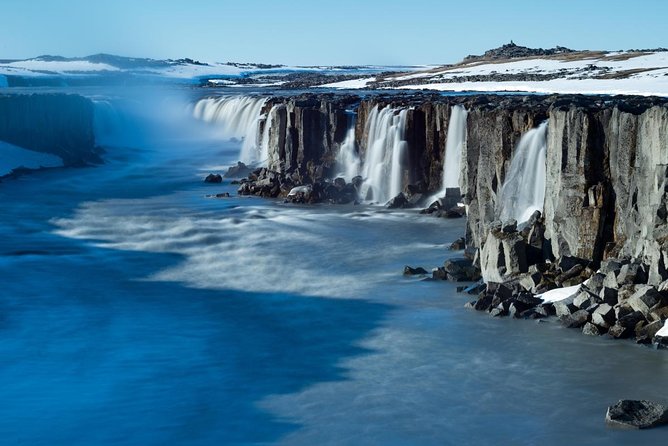
Dettifoss is the largest waterfall in Iceland and described as the most powerful in Iceland and Europe. You’re standing in the middle of Jökulsárgljúfur canyon. Even with no official superlatives, the physical scale is the point.
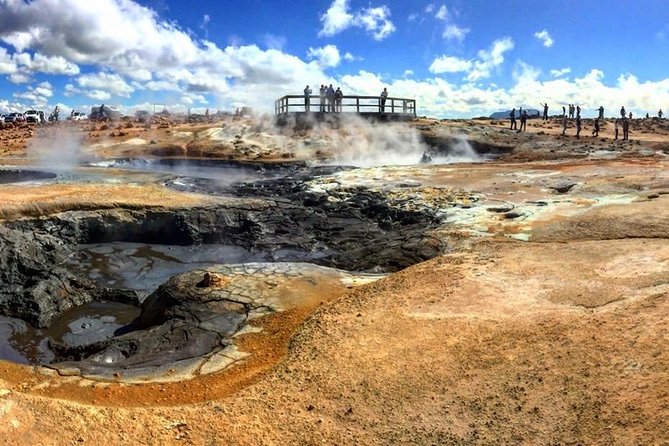
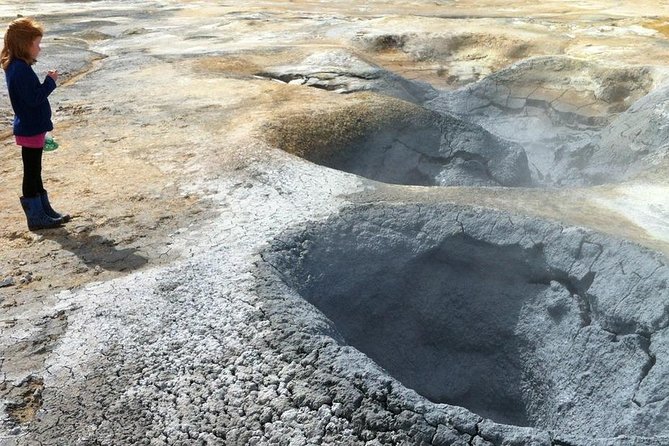
Next is Námaskarð (also referred to as Hverarönd), an active, ever changing thermal field with thermal springs, mud pots, and boiling mud. You’ll see colorful fumaroles and solfataras, and the colors come from sulphur and deposits. It’s one of the clearest examples of Iceland’s “active ground,” not a postcard afterthought.
Then the route continues with Krafla Lava Fields, tied to the central volcano Krafla. This area helps you understand how volcanic systems create both destruction and new terrain you can walk on later.
Mývatn itself: lava formations, pseudocraters, and the Nature Baths
This part of the island is built for geology lovers and birdwatchers.
Dimmuborgir is known for its lava formations made of massive lava tubes, up to a few meters in diameter. They formed about 2,300 years ago when lava flowed over a small lake, then steam rose through the tubes. The area is also home to the icelandic jule lads in local folklore, which adds a human layer to the rock.
Lake Mývatn is one of the largest lakes in Iceland, and in summer it’s home to many migrating birds. At the southwest corner, you also have Skútustaðagígar, pseudocraters.
And then you get the soak: Myvatn Nature Baths (Jarðböð vid Myvatn). It’s a naturally heated, man-made lagoon with mineral rich waters known for health-giving properties. This is another practical break after big outdoor viewing.
Goðafoss and Akureyri: water, town life, and an easier evening
As you head toward Akureyri, you stop at Goðafoss, the waterfall of the gods.
Then you arrive in Akureyri. There’s a city tour, plus dinner is on your own. Overnight is in Akureyri. I like this segment because it adds a real town rhythm. After days of glaciers, you get shops, streets, and a chance to sit down like a local for dinner.
Snæfellsnes peninsula: Kirkjufell, black pebbles, lava caves, and sea cliffs
Next the route swings to Snæfellsnes, where you can feel Iceland’s “stories in the rocks” vibe.
Kirkjufell is one of the most picturesque mountains in Iceland, and you’ll also see Kirkjufellsfoss nearby. The pairing of mountain and waterfall is one of those famous scenes for a reason.
Then you visit Djúpalónssandur, a black beach of smoothed pebbles plus rusty parts scattered from a ship stranded there in 1948. That small human history adds weight to what could be only a scenery stop.
Hellnar is a small ancient fishing village with rock formations on the beach. Next comes Vatnshellir, a lava cave, described as a lava tube in an 8,000 year lava field. If you like geologic time scales, this is a standout.
Arnarstapi offers both views and myth. The area is known for a sculpture of Bárðr, half human and half ogre, tied to the legend of losing a daughter and becoming a guardian spirit of the Snæfellsnes area.
Finally, Lóndrangar brings you to basalt cliffs, volcanic plugs of basalt. You’ll see how erosion shapes rock pillars into something that looks almost engineered.
Into the glacier on Langjökull and the west Iceland waterfall duo
This tour includes a seasonal ice option plus a less visited western waterfall pair.
For summer (April to October), there’s Intotheglacier: a man-made ice tunnel into the second largest glacier in Iceland, Langjökull. A pickup for the trip happens in Húsafell, and passengers travel on a monster truck onto the glacier. In good weather, the view from the glacier top is spectacular, and a guide leads you.
Then you head to Hraunfossar and Barnafoss, located in Borgarfjörður. Hraunfossar is a series of waterfalls where water streams out of porous lava into the Hvítá river, stretching about 900 m across. Barnafoss, the children’s waterfall, has a story tied to a lava bridge that was destroyed after children died in the crossing.
You also get a quick stop in Borgarnes on the way back toward Reykjavik.
Price and value for a private 7-day around Iceland tour
At $11,101.77 per person, this is not a “maybe we should try Iceland” price. It’s a “we want the island handled for us” price.
What you do get that helps justify it:
- A tour guide throughout
- Hotels or guesthouses with daily breakfast, for six nights
- Private transportation
- Entrance for all sights and activities included, with extras not included
- All fees and taxes covered as part of the package
What you still pay on your own:
- Dinner is not included
- Lunch is included only on day 1, other lunches can be bought on the trip
So the value math comes down to this: if you were to self-drive a route this wide, with paid admissions, lodging, and a lot of “what am I looking at” learning gaps, the cost adds up fast. If you want Iceland to feel guided, not just driven, the private format can be worth it even at a premium price.
Who this tour fits best, and who should think twice
This tour is a great fit if you:
- Want to see a wide range of Iceland in a single week without car rental stress
- Prefer having a guide explain geology, history, and folklore as you move
- Like the idea of daily hotel comfort plus included breakfast, rather than day after day of logistics
You might think twice if you:
- Are budget-first. This is a premium private price.
- Hate tight outdoor time windows, since a route packed with waterfalls, caves, and glacier areas naturally means long days and frequent stops.
Should you book this private around-Iceland tour?
If your goal is a fast, guided “greatest hits plus deep geology” loop, this one fits. The standout strengths are the geothermal variety (Friðheimar and Secret Lagoon), the ice sequence (Jökulsárlón and Fjallsárlón with black-sand walking), and the north power stops (Dettifoss plus Námaskarð and Mývatn). The private guide format also makes the whole trip feel less like a checklist and more like you’re learning how Iceland works.
Book it if you’re ready to pay for simplicity and explanation. Skip it if you want a cheaper independent road trip and you’re comfortable driving and figuring things out yourself.
FAQ
What time does the tour start?
The start time is 9:00 am.
Is pickup included?
Pickup is offered.
How many nights of lodging are included?
Six nights of accommodation at local hotels and guesthouses are included, with daily breakfast.
Are meals included?
Lunch on day 1 is included. Dinner is not included, and lunch on other days can be bought on the trip.
Does the tour include private transportation and guide service?
Yes. It includes a tour guide and private transportation for the group.
Are admission fees included?
Entrance for all sights and activities is included, except for extras.
Do I need good weather for the experience?
Yes. The experience requires good weather.
What happens if the tour is canceled or you cancel yourself?
The experience is non-refundable and cannot be changed for any reason. If it is canceled due to poor weather, you will be offered a different date or a full refund. If the minimum number of travelers is not met, you will be offered a different date or experience, or a full refund.
Recently reviewed around Reykjavik
- Private Day Trip to the Icelandic South Coast from Reykjavik★ 5.0 · 45 reviews
- Deluxe Whale Watching and Whales of Iceland Exhibition Combo from Reykjavik★ 4.5 · 13 reviews
- Day Trip to the Golden Circle and Hot spring Geyser by 4WD Jeep from Reykjavik★ 5.0 · 27 reviews
- Private Transfer from Reykjavik to Reykjavik Airport KEF by Sedan★ 5.0 · 3 reviews
- Private Tour Höfn: Jokulsárlón , Diamond Beach, Secret Glacier★ 4.5 · 3 reviews
- South Coast and Glacier Snowmobiling Day Trip from Reykjavik★ 4.5 · 22 reviews
- Cold & Hot: Adventure Spa Tour Combo: Silfra & Sky Lagoon Self-Drive★ 5.0 · 36 reviews
- Experience Countryside of Iceland by Horseback Riding★ 4.5 · 16 reviews
7-Day Experiences, compared.
7-Day Complete Iceland: South Coast, Golden Circle, Akureyri & Snaefellsnes
Read our review →
4, 5, 6 or 7-Day Small-Group Ring Road Tour from Reykjavik
Read our review →
7-Day Self-Drive Private Tour Northern Lights Adventure – Iceland South & West
Read our review →
7 Day Iceland with Reykjavik Northern Light | Blue Lagoon | Golden Circle ……
Read our review →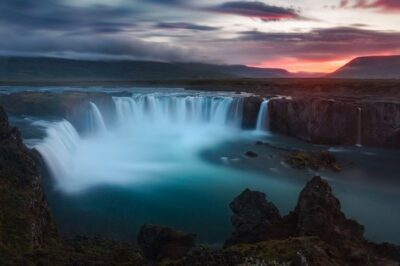
7 Day Iceland with Reykjavik Blue Lagoon Snæfellsnes | Golden Circle | South….
Read our review →Browse the lists this tour appears in