Reviewed · TOURS
8-Day Small Group Tour Around Iceland from Reykjavik
This 8-day small-group loop around Iceland is interesting because it stitches together the classics plus the wild stuff in between, without you spending your vacation on route planning and parking puzzles. You ride in a comfortable minibus with a tight group and you get picked up and dropped off, which makes the whole trip feel like a moving basecamp. I love the small-group pace, and I love that the plan is built around Iceland’s big “see it once” priorities.
I also like the English-speaking driver-guide setup. On real trips, guides such as Thor, Heidrun, and Erla are known for explaining what you’re looking at before you arrive, and for keeping everyone oriented so you do not miss the best viewpoints. The one consideration is physical and weather reality: some days include real walking and steep or uneven ground, so pack for cold, wind, and a slower stride if you need it.
Key Highlights You Will Feel on Day One
- Small group (max 18) so you are not lost in a crowd at every stop
- Professional driver-guide in the front seat, with practical guidance on timing and viewing angles
- Big-ticket inclusions like glacier hike, crystal ice cave, and whale watching
- Overnight stays with breakfast (7 nights) so mornings start easy
- Northern Lights chances built into several nights outside city light
- A full Iceland sampler: Golden Circle, South Coast, North, and Snæfellsnes in one loop
Why This Iceland Loop Works: Minibus Travel Without the Headache
There are two ways to experience Iceland. One is the DIY approach, where you spend your time coordinating everything. The other is a guided loop, where you get a tight route, reliable timing, and local expertise handed to you day after day. This tour is clearly aimed at the second style, and that matters because Iceland’s roads can be slow, weather can change fast, and some stops need timing to work well.
The minibus format is also a real comfort upgrade. You are not squeezed onto a huge coach, and with a smaller group you usually get quicker boarding, easier photo stops, and fewer “where did everyone go?” moments.
One more practical win: most major sights get enough time to actually look, not just pass by. The stops are frequent, but the pacing usually gives you room for photos, short walks, and the kind of detours you make when the weather looks good for once.
More around Reykjavik worth an open tab:
- Reykjavik: Golden Circle Full-Day Tour with Kerid Crater
★ 4.8 · 24,485 reviews - Reykjavik Food Walk – Local Foodie Adventure in Iceland
★ 5.0 · 18,952 reviews - Iceland: Northern Lights Bus Tour from Reykjavik
★ 4.1 · 11,161 reviews
Price and Value: What Your $2,777.76 Per Person Covers
At $2,777.76 per person for about 8 days, this is not a cheap trip. But it is also not “just a seat on a bus.”
Here is what you are buying:
- 7 nights of accommodation with breakfast
- guided transport in a comfortable minibus
- several paid experiences bundled in, including a glacier hike and an ice cave tour (with safety equipment)
- whale watching in Hauganes
- WiFi on board and pickup and drop-off from designated stops
In Iceland, lunch and dinner are a big variable cost because eating out is expensive. Since lunch and dinner are not included, you will likely manage meals with grocery-store snacks, simple café options, or whatever your lodge provides. That is not a flaw, it is a tradeoff. You get your money focused on the experiences that are hard to organize yourself, like certified glacier and cave activities.
If you want maximum convenience and you are okay doing a lot of sightseeing days, the bundled value starts to make sense quickly. If you are hoping to spend every evening in a top-tier restaurant or want free time with no structure at all, you might feel the trip is more “on schedule” than you expected.
Day 1: Gullfoss, Geysir, Þingvellir, Then Hvolsvöllur and Northern Lights Waiting
Day 1 is built like a thunderclap of Iceland’s best-known “wow” stops. You start with Gullfoss, one of Iceland’s most famous waterfalls. It is powerful in a way that photos cannot fully translate, and it is the kind of place where you can pause, take the walkway views, and still feel the spray.
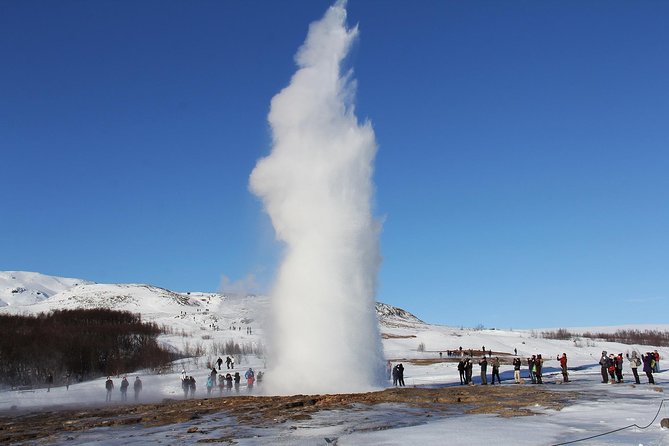
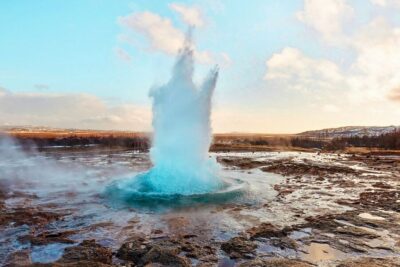
Next comes Geysir, the geothermal area where hot springs and steam vents do their thing all day. The star here is Strokkur, an active geyser that erupts often, shooting boiling water up to around 25 meters. This is one of the easiest stops to enjoy even if you are not feeling super energetic, because the action is continuous and you can watch without hiking.
Then you reach Þingvellir National Park, UNESCO-listed for geology and for history. You are looking at the meeting point of tectonic plates, where the Eurasian and North American plates drift apart. This is also where the Althingi, Iceland’s early parliament, was founded in 930 AD. You get a rare combo here: dramatic landforms and a reminder that Iceland’s identity has roots that go way beyond volcano tourism.
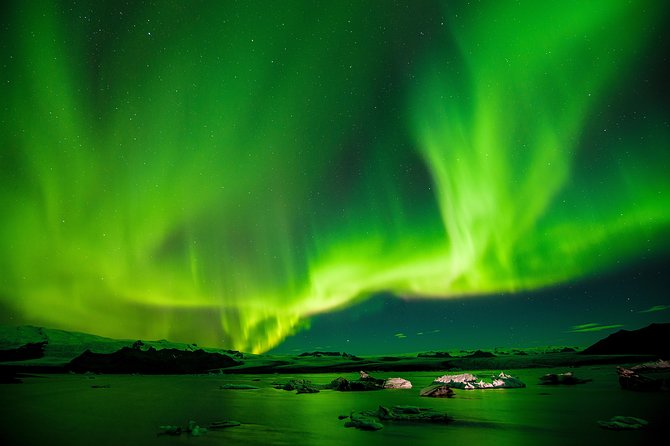
After the main loop stops, the tour heads to Hvolsvöllur, away from heavy city light. That is where the Northern Lights chances become part of your real evening plan. Iceland’s aurora rules are still rules, meaning no one can guarantee a sighting. But staying outside the glow gives you a fighting chance.
Day 2: Seljalandsfoss and Skógarfoss, Black Sand at Reynisfjara, Plus Sólheimajökull Glacier Hike
Day 2 is “South Coast Greatest Hits,” with one physically serious inclusion.
Seljalandsfoss is a standout because you can walk behind the waterfall. That turns a standard waterfall stop into an around-you experience. You feel mist on your face and you get angles that most people miss when they only photograph from the front.
Skógafoss brings the opposite mood. It drops about 60 meters from a cliff into a narrow gorge, and the surrounding scenery frames the fall like a stage set. This is one of those places where you can take your photos, then walk a bit to find a higher viewpoint if conditions allow.
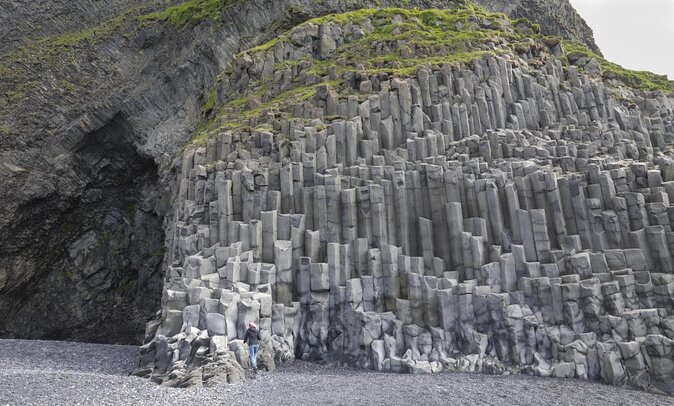
Reynisfjara Black Sand Beach adds coastal drama. You see basalt columns near the cliffs and powerful Atlantic waves crashing into the shore. It is iconic for a reason, but it also rewards attention. If the wind is up, keep a respectful distance from the water’s edge.
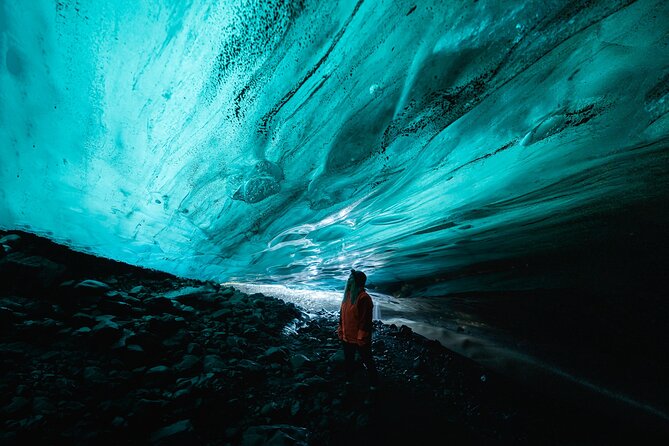
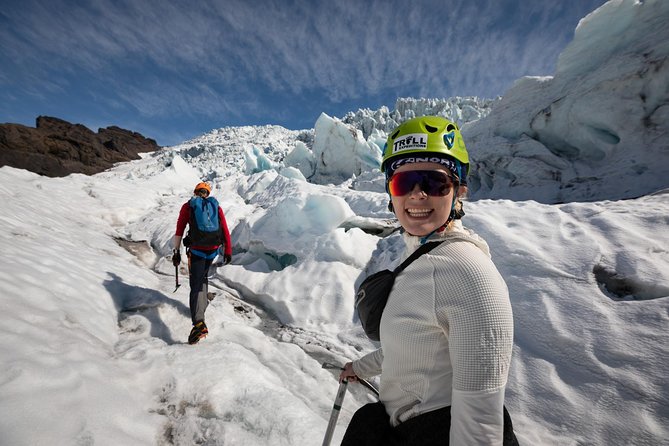
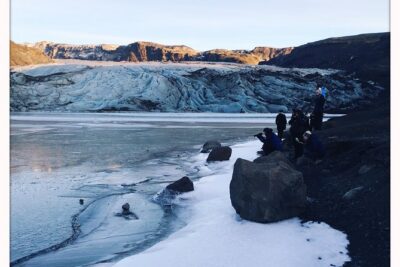
Then comes the glacier hike on Sólheimajökull. This is included, lasts about 3 hours, and includes safety equipment. You will hike across glacial ice streaked with volcanic ash, with a guide leading the way. This is not a stroll. You need good balance and the willingness to move carefully on cold surfaces.
If you are choosing one day to be in your best physical shape, make it this one. But do not worry if you are not an athlete. The guide and equipment support you, and the real goal is safe exploration and awe, not speed.
You finish in Vík í Mýrdal, another spot that can help with Northern Lights viewing because light pollution drops off compared to major cities.
Same corner of Iceland, a different kind of day out:
- Reykjavík: South Coast Waterfalls, Black Sand & Glacier Tour
★ 4.8 · 11,030 reviews - Reykjavík: Whale Watching and Marine Life Cruise
★ 4.6 · 9,838 reviews - Reykjavik: Sky Lagoon Entrance Pass With 7-Step Spa Ritual
★ 4.8 · 6,166 reviews - From Reykjavik: Golden Circle, Kerid, & Secret Lagoon Tour
★ 4.8 · 6,009 reviews
Day 3: Diamond Beach, Jökulsárlón, and the Crystal Ice Cave Inside Vatnajökull
Day 3 is all about glaciers meeting the sea, and it delivers.
Breiðamerkurjökull and the surrounding laguna area feed the icebergs that wash up at Diamond Beach. It looks like the shoreline is sprinkled with glass because chunks of ice sparkle on black sand. It is one of those rare places where you do not need a special lens to make your photos pop.
Then you head to Jökulsárlón Glacier Lagoon. Floating icebergs drift in a huge landscape of meltwater. In colder months you may also see seals in the area, depending on season and conditions. Even without wildlife, the sheer scale of ice makes this stop feel more cinematic than most.
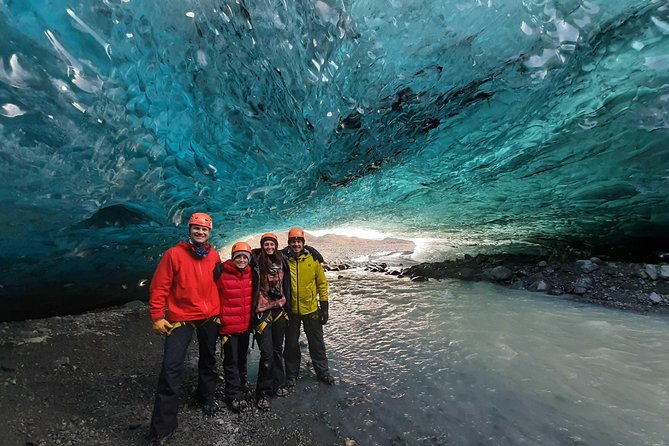
You also get time at Vatnajökull’s Crystal Ice Cave experience, with safety equipment included. The ice cave tour is a true highlight day. You enter a manmade-feeling world that is still natural, carved and shaped over time. This is not just sightseeing, it is a guided walk into an icy environment where the textures and colors are the whole point.
You close the day with a viewpoint connected to Iceland’s volcanic drama, including reference points around Hvannadalshnjúkur and the Öræfajökull area. Even if you are not studying volcano maps, you will feel that Iceland is not just scenic. It is active.
Day 4: East Fjords by Way of Djúpivogur, Horses at Finnstaðir, and Optional Vök Baths
Day 4 shifts gears. The East Fjords feel quieter, more personal, and more grounded in everyday life.
You begin with Djúpivogur, a small village that is part of the Cittaslow movement, which focuses on a slower, better-life pace. You also pass dramatic mountain shapes and scenic fjord views as you move through this region.
Then you get Búlandstindur, a pyramid-shaped mountain that looks almost too perfect. It is a great place to slow down and notice how Iceland’s terrain changes by the hour.
One of the most memorable inclusions on this day is the farm stop at Finnstaðir Holiday Home. You meet farmers Helga and Siggi and learn about the Icelandic horse. The horse is famous for its unique traits and gentle temperament, and this stop is more than a photo break. It is an encounter with Iceland’s rural rhythm.
You will also hear local folklore themes around Lake Lagarfljót and the Lagarfljótsormur sea serpent. This is not “tourist trivia.” It is a way of understanding how stories stick around in places where nature is so powerful you have to explain it somehow.
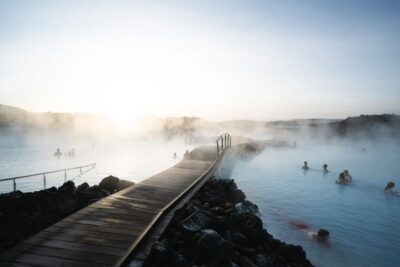
Finally, there’s the optional unwind: Vök Baths on Lake Urriðavatn. It is not included, but it is a smart add-on if you want a hot soak after days of cold wind. You can soak in geothermal waters, use onshore pools, and enjoy facilities like saunas and a cold tunnel with mist shower. This is also a good night to keep your eyes up for aurora if the sky clears.
Day 5: Námafjall and Dimmuborgir Near Lake Mývatn, Then Godafoss to Akureyri
This day is geothermal and volcanic in a big way, and it feels different from the waterfalls of the South Coast.
You start with Námafjall near Námaskarð pass. Here you see sulfurous mud springs and steaming fumaroles, powered by the Krafla volcano fissure zone. The smell alone is a reminder that Iceland’s heat is not just pretty. It is doing real work underground.
Next comes Dimmuborgir, meaning Dark Castles. Lava fields form eerie shapes, created when lava flowed into wet marshlands. The result is a maze of rock formations that looks like it belongs in a fantasy map.
Then you reach Lake Mývatn. This area is volcanic, with geothermal activity and a history of eruptions. It is also known for arctic char and for draining into the Laxá river system, famous for brown trout fishing. You also get the reality check that Mývatn is cold in winter, which matters when you pack.
You finish with Godafoss, Waterfall of the Gods. It is a top-tier waterfall that also feels grounded in history. The name matters here. It is not just a drop of water, it is a landmark with cultural meaning.
Overnight is in Akureyri, often called the capital of the north. It is a lively base and a practical one for getting around Iceland’s northern regions.
Day 6: Akureyri Town Time, Hauganes Whale Watching, and Grábrók Crater at Night
Day 6 is the “north does its own thing” day.
You start with Akureyri itself, the hip and charming town with around 20,000 people and warm energy even when the weather is gray. One fun detail you might notice is the town’s small design touches, like heart-shaped stop signs. It is a simple reminder that Iceland is not only nature.
Then you head to Hauganes. This small fishing village gives you harbor scenery and a black sand beach with mountains and open ocean in the frame.
The included highlight is whale watching from Hauganes. The boat ride goes out into Eyjafjörður Fjord and you look for whales in one of the world’s best regions for seeing them. What you see depends on conditions, but the opportunity is real and it is built into the tour.
If you have ever worried about cancellations during weather, keep expectations flexible. Whale watching can get affected by sea and wind conditions, and you should know that some trips may adjust. The key is that whale watching is scheduled as an included activity.
To finish, you stop at Grábrók crater near your next rest area. It is a well-shaped volcanic crater with moss-covered lava fields around it. This stop is also a chance to watch for Northern Lights if the sky cooperates.
Day 7: Snæfellsnes Peninsula Highlights, Seals at Ytri Tunga, and Kirkjufell
Day 7 is west-coast scenery with geology and ocean drama.
You start on the Snæfellsnes Peninsula with Gerðuberg, a cluster of hexagonal basalt columns. The symmetry is the point, and it looks more deliberate than nature usually does.
Then you visit Ytri Tunga Beach. It is one of the rare white sand beaches in Iceland, and it is known for a seal colony. You might spot seals lounging on rocks, which adds a living soundtrack to your photos.
Búðir church (Budakirkja in the itinerary) is next. It is a black wooden church that is easy to photograph and usually feels calm. It is also a reminder that this peninsula is not just famous for dramatic cliffs, it is also a landscape of small details.
Arnarstapi brings coastal walks. You get cliffs shaped by volcanic forces meeting Atlantic waves, plus arches and marine features shaped by erosion. You also hear local stories around characters like Bárður, a half-man, half-troll type figure from regional folklore.
At the end of the peninsula, you pause near Snæfellsjökull, the glacier-topped stratovolcano connected to the Journey to the Center of the Earth. Even if you do not know the book, it is Iceland at its myth-and-mountain best.
Then you visit Londrangar basalt cliffs and Djúpalónssandur beach. Djúpalónssandur includes a footpath through lava formations to reach the black sand shore. It is the kind of walk that feels like you are moving through a natural film set.
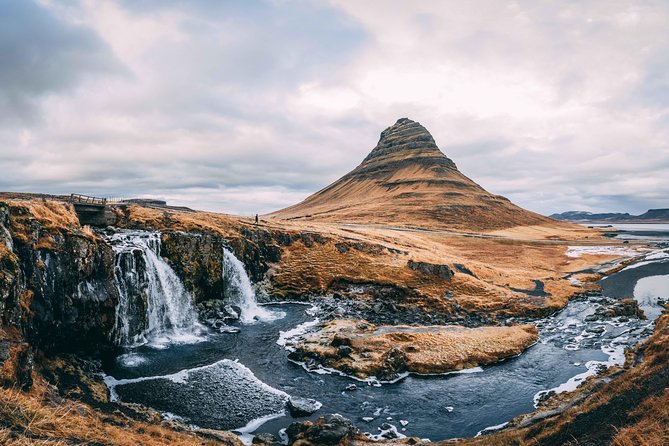
You wrap with Kirkjufell, also called Church Mountain. It is often described as Iceland’s most photographed peak, and if you get the right light, it can look unreal. If you are a Game of Thrones fan, you may recognize the resemblance to Arrowhead Mountain, a filming location.
Day 8: Hraunfossar and Barnafoss, Víðgelmir Cave Option, Deildartunguhver Thermal Spring, and Back to Reykjavik
Day 8 is a satisfying finale of lava water, a legend, and serious geothermal power.
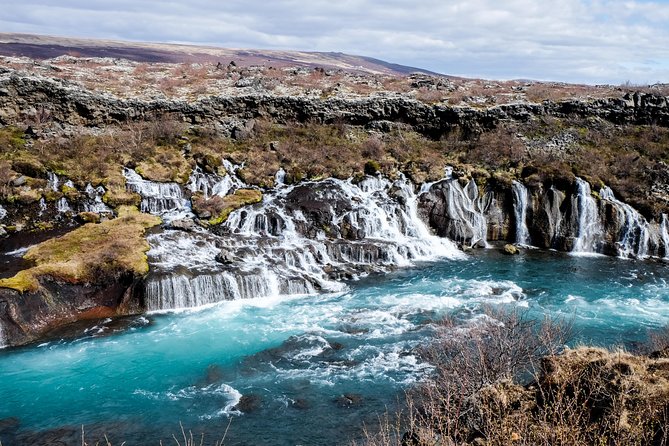
Hraunfossar, Lava Falls, is a unique phenomenon where streams flow over a stretch of lava fields. Because it is not a single dramatic plunge, it plays differently than a classic waterfall. It feels like water is gently spilling out of the earth.
Then you stop at Barnafoss, Children’s Fall. The legend says two children fell into the waterfall on Christmas Day after refusing to go to church. Whether you treat it as legend or cultural story, it gives the place character.
Next is an optional stop: a cave tour at Víðgelmir, Iceland’s largest lava cave. It is not included in the base price. If you want to add this, it is a natural fit after glacier and ice cave experiences earlier in the trip.
Then comes Deildartunguhver thermal spring, the biggest and most powerful hot spring in Europe based on the tour’s info. You can see how much water comes out, and this kind of stop is a great closing note because it reminds you Iceland’s heat is not one-time spectacle. It is constant infrastructure for nature.
You finish in Reykavik in the afternoon, so you still have time to plan a meal, do a little wandering, and think about what part of Iceland actually stuck with you.
Northern Lights Chances: How This Route Improves Your Odds
This tour builds Northern Lights opportunities into multiple nights by choosing accommodations away from city light. You get chances in places like Hvolsvöllur, Vík í Mýrdal, and even Akureyri.
But keep the aurora mindset simple:
- You are chasing darkness, not certainty.
- Cold and wind make you want to hurry, so dress warmly even when you think you will only stand outside briefly.
- If skies clear, you will be ready, and that is half the battle.
Also, remember that your best viewing might require patience. A guided group helps because the guide can tell you where to look and how to time it, but you still have to wait for the sky to do its thing.
Small Group Energy and Guide Quality: The Real Difference You Can Feel
The tour caps at 18 people. That matters because you get the benefits of group travel without the chaos.
In real life, the guide and driver role is huge. People have credited guides like Thor, Heidrun, Johan, Pauli, Gylfi, and Erla for doing three key things:
- explaining what is coming up so stops feel richer
- handling timing and safety so you are not guessing
- keeping the group moving at a pace that still allows photos and breaks
Also, the minibus size helps when weather changes. If roads or conditions shift, a smaller vehicle and an experienced guide can adjust without the whole day falling apart.
What to Pack for Glacier Walks and Winter-Like Conditions
Even if you book in summer, Iceland weather can still surprise you. For this tour, plan for cold wind and wet ground.
Your base packing should include:
- layers you can add or remove quickly
- a waterproof jacket (this is practical, not fancy)
- gloves, hat, and a warm layer for evenings, especially if you chase aurora
- waterproof shoes or boots you trust on uneven surfaces
The tour also lists paid rentals for specific items:
- waterproof jacket rental, waterproof pants rental, and hat and gloves combo
- hiking boots rental
If you want the easiest setup, renting can be worth it rather than trying to travel with heavy gear.
One more tip from experience on this kind of itinerary: bring a small towel or chamois style towel if you plan to do water stops and then sit in the bus. It helps you dry off faster.
Optional Add-Ons: Vök Baths and the Lava Cave Choice
Two optional add-ons appear in the plan:
- Vök Baths at Lake Urriðavatn, not included
- Vidgelmir Lava Cave, not included
I like the decision logic like this. If your glacier and ice cave days leave you wanting “one more geothermal moment,” Vök Baths can reset your body. If you want variety beyond snow and ice, the lava cave is a logical extension.
If you feel uncertain about timing, decide on the day. Iceland tours run on real weather, and your energy level matters.
Should You Book This Tour?
Book this tour if you want an efficient Iceland sampler that hits waterfalls, glaciers, lava, geothermal sites, and northern regions, with guided stops and included signature activities. The small-group minibus setup is a big deal if you hate logistical stress.
Do not book this tour if you want lots of free unstructured time every day, or if you cannot handle cold weather and some walking on uneven ground. Glacier and cave days also mean you need to take safety and directions seriously, even if you are not a big hiker.
My best advice before you book: choose this for the experiences that are hard to DIY. If that matches your travel style, you will come away feeling like you saw Iceland in big strokes and still had moments to actually enjoy each place.
FAQ
What time does the tour start?
Start time is 8:00 am.
Is pickup included, and how does it work?
Pickup is offered from designated bus stops. Pick up starts at 8:00 and might take 30 minutes. The tour notes that hotel entrances in downtown areas may not be possible, so you may be picked up at the nearest bus stop.
How long is the tour and how many nights are included?
The tour is about 8 days with accommodation for 7 nights.
What is included in the price?
Included items are a guided minibus tour, accommodation, Hauganes whale watching tour, ice cave tour with safety equipment, glacier hike with safety equipment, pickup and drop-off from designated stops, small group size, professional English-speaking driver-guide, WiFi on board, transportation in a comfortable minibus, and breakfast for 7 days.
Are lunch and dinner included?
No. Lunch and dinner are not included.
What optional activities can you add?
Vök Baths and Vidgelmir Lava Cave are listed as options to add, plus horseback riding (by contacting the operator).
What rentals are available for hikes and cold-weather gear?
The tour lists rentals for hiking boots, waterproof jacket, waterproof pants, and a hat and gloves combo. It also lists a luggage storage option.
Is the tour limited to a certain group size?
Yes. The tour has a maximum of 18 travelers.
What language is the tour conducted in?
The tour is offered in English.
What is the cancellation policy?
Free cancellation is available up to 24 hours in advance of the experience for a full refund. Cancel at least 24 hours before the start time to get a full refund.
Recently reviewed around Reykjavik
- Private Day Trip to the Icelandic South Coast from Reykjavik★ 5.0 · 45 reviews
- Deluxe Whale Watching and Whales of Iceland Exhibition Combo from Reykjavik★ 4.5 · 13 reviews
- Day Trip to the Golden Circle and Hot spring Geyser by 4WD Jeep from Reykjavik★ 5.0 · 27 reviews
- Private Transfer from Reykjavik to Reykjavik Airport KEF by Sedan★ 5.0 · 3 reviews
- Private Tour Höfn: Jokulsárlón , Diamond Beach, Secret Glacier★ 4.5 · 3 reviews
- South Coast and Glacier Snowmobiling Day Trip from Reykjavik★ 4.5 · 22 reviews
- Cold & Hot: Adventure Spa Tour Combo: Silfra & Sky Lagoon Self-Drive★ 5.0 · 36 reviews
- Experience Countryside of Iceland by Horseback Riding★ 4.5 · 16 reviews
Tours, compared.
Golden Circle Full-Day Tour with Kerid Crater
Read our review →
South Coast Waterfalls, Black Sand & Glacier Tour
Read our review →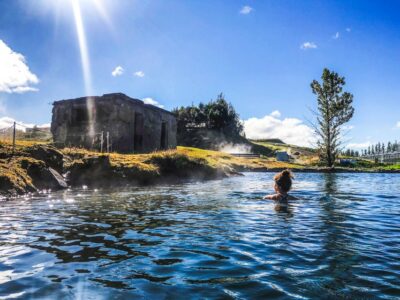
Iceland South Coast Full Day Small-Group Tour from Reykjavik
Read our review →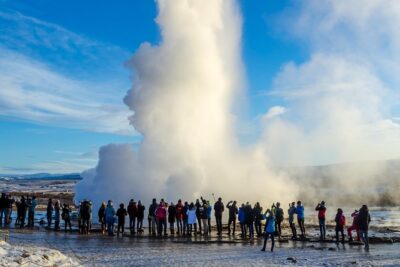
Golden Circle Classic Day Tour from Reykjavik
Read our review →
Reykjavík Small group Walking Tour – by CityWalk
Read our review →